


The ecommerce landscape is evolving, driven by AI, automation, and changing consumer behavior. Today, many businesses are building intelligent ecosystems with tools like an online store builder or an ecommerce website builder. As customer expectations are rising, staying up to date with the latest trends of online shopping is becoming essential.
This is a guide where we explain where ecommerce is headed to and we also tell you how to adapt.
What Is The Future Of ECommerce?
The future of ecommerce will be defined by immersive shopping experiences and AI personalization. The operations will be automated too. Here, we predict what is going to happen within the next 5 years and what it is going to change.
Ecommerce sales are expected to reach $8-9 trillion by 2030, globallyMore than 80% of customer interactions will be powered by AISocial commerce could account for more than 20% of all online sales
What is going to change?
- Shopping will become predictive
- Customers will receive recommendations tailored to them
- Businesses will heavily rely on the future of ecommerce technology like AI, AR, and automation
How Will The Current Trends Shape The Online Shopping Landscape?
Major Changes Are
Hyper-Personalization
Artificial Intelligence will curate:
- Content
- Pricing
- Product recommendations
Conversational Commerce
- Chat-based shopping (ChatGPT-style chat assistants)
- Instant answers for queries
- Instant product suggestions
Faster Checkout
- Buy Now, Pay Later (BNPL )
- One-click payments
A lot more sales are being completed with the buy now, pay later option. Customers are feeling valued as the brands trust them.
Immersive Shopping
- Virtual try-ons
- AR/VR product reviews
Omnichannel Experience
Customers switch between different devices like
- Mobile
- Desktop
- Social media
Top 10 E-commerce Trends Shaping The Future
Here are the most important trends of online shopping that you need to know.
AI-Powered Personalization
AI forms the foundation of the future of ecommerce technology.
What it does
- Predicts customer behavior
- Recommends products
- Optimizes pricing
AI helps businesses understand customer behavior in real-time. This enables businesses to deliver highly relevant recommendations to users. It improves customer experience and retention. It also tends to increase conversion rates.
Social Commerce Explosion
Social platforms have started to become marketplaces.
Key Insight
Instagram, Facebook, and TikTok drive billions in sales
Social media is not just for engagement anymore. It is a direct sales channel. Businesses can reach customers on social media where they are already spending time. This reduces the time needed for product discovery.
This often improves conversions and helps brands build stronger relationships with their audience.
No-Code Store Creation
Creating an online store is easier than ever before.
No-code solutions make ecommerce accessible to everyone by reducing the dependency on developers. Businesses can launch faster, test ideas quickly, and scale without heavy technical investment.
Example
Store.link allows you to:
- Build a store using Google Sheets
- Manage products easily
- Launch quickly
Voice & Visual Search
Searching for products is no longer limited to typing.
Examples
- “Show me black sneakers under $100” - Example of a voice search
- Upload image → “Find the product”
Voice and visual search make product discovery a lot simpler. Users can now search naturally using just images, or they can provide voice inputs for searches.
Augmented Reality (AR)
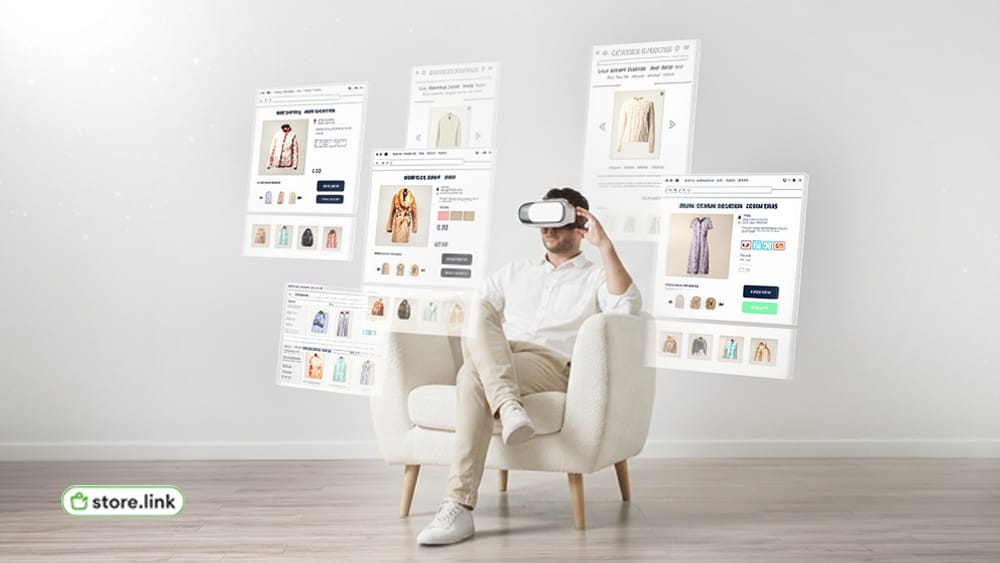
Augmented reality connects online and offline shopping. The use cases are as follows
- Try clothes on virtually
- Preview furniture in their home
AR helps customers make better purchase decisions by letting them visualize products before actually buying. This helps reduce return rates and increase confidence. It is more useful for clothing, furniture, and accessories.
Mobile-First Shopping
Mobile devices are responsible for generating more than 70% of the e-commerce traffic. So, what should businesses be immediately doing?
- Optimize mobile UX
- Simplify checkout
Offering a poor mobile experience can lead to lost sales. As more users are only depending on their mobile devices for online shopping, businesses have to offer mobile optimization with quick loading and smoother navigation.
Sustainable E-commerce
More consumers are choosing eco-friendly brands. Key data is as follows
- 73% of consumers prefer sustainable products
So, what are brands doing to support this
- Eco packaging
- Carbon-neutral shipping
Global consumers have become more cautious about sustainability. Recent trends show that more people are choosing eco-friendly products. It’s high time brands have to adopt sustainable practices for both the environment and building brand trust.
Faster & Flexible Payments
Payment innovation is reshaping the checkout processes.
Popular payment options available are
- BNPL
- One-click checkout
- Digital wallets
Around half of the cart abandonments happen during checkout. Providing multiple payment options increases the chances of customers completing purchases.
Automation & Smart Logistics
AI is optimizing and automating the entire supply chain.
Benefits
- Reduced costs
- Faster delivery
- Better inventory management
Automation improves the efficiency from inventory management to delivery. With automation, businesses can reduce human errors and save time. It also improves scalability.
Data Privacy & Trust
Do you care about your customer data? Yes, right?
Key Insight
79% of users are protected by privacy laws globally
Data privacy is a term that is heavily used these days. More number of users have started to care about their data. As a business, you have to prioritize transparency and data security.
Quick Summary Table
Why Choose Online Shopping?
Here are the top benefits driving the future of ecommerce.
- Convenience - Shop anytime, anywhere
- Better Prices - Easy comparison. Frequent discounts
- Wide Product Selection - Access global marketplaces
- Time Saving - No physical store visits
- Personalization - Tailored recommendations
These form the foundation of the trends of online shopping.
How You Can Build A Store For The Future?
As the future of ecommerce technology evolves, what businesses need are simple yet scalable solutions. Store.link is built for the future as it chooses the convenience of usage for everyone alike.
Store.link stands out:
- It is entirely built on Google Sheets
- Freely available with optional paid plans
- No coding required
- Quick setup
- Easy product management
Whether you are a beginner or a scaling brand, Store.link acts as a powerful online store builder and ecommerce website builder without any complexity.
Everyone wants to launch their online stores easily and quickly. Tools like Store.link become relevant here by removing the technical complexity. As it is built on Google Sheets users do not have to depend on developers for anything. Seamlessly manage pricing, product listing, and updating.
This has become the most useful for small businesses and startups. They can quickly enter the ecommerce space.
What Challenges Will Businesses Face In The Future Of Ecommerce?
While the future of ecommerce brings countless opportunities, it also comes with challenges.
Key challenges
- Increasing competition in online markets
- Rising customer expectations for fast delivery
- Keeping up with quickly changing technology
- Data privacy and security concerns
Businesses have to adapt to the latest future trends in ecommerce. Also, invest in the right tools and strategies. Those who fail to innovate may struggle to survive in this evolving ecommerce landscape.
Also read: How to Create a WhatsApp Ecommerce Store
Conclusion
Anyone can sell products online. But, the future of ecommerce is not about that. Businesses that now focus on creating intelligent and personalized shopping experiences will succeed in the future.
You have to constantly innovate to stay competitive in the market. Because new trends evolve and change with each passing day. The key to long-term success is leveraging the right tools and deeply studying customer behavior.
Key Takeaways
- AI will drive everything
- Technology adoption is critical
- Customer experience will define success
Businesses that embrace these future trends in ecommerce early will dominate the market.
FAQs
What is the future of e-commerce in 2030?
By the year 2030, ecommerce will be completely driven by artificial intelligence and automation. Product deliveries will be way faster. Each shopper will get a personalized shopping experience. There will be strong interactions across social media.
How will the future of e-commerce change the online shopping experience?
The future of ecommerce will be defined by AR-assisted shopping. Along with augmented reality, voice and visual search will dominate the market. The simplified checkout processes will become highly significant.
What are 5 advantages of online shopping?
It is hard to choose only five advantages of online shopping. Still, when we look at the most loved ones, getting the best deals from physical stores and the convenience of shopping from anywhere are definitely the top 2. Saving time of going to the store and coming back, wide product selection, and hyper-personalized recommendations based on customer history are the next 3 in the top 5.
What are the major trends in e-commerce?
There are many trends in ecommerce. They also keep changing. However, the current major trends are social commerce and sustainable ecommerce. Along with this both, voice search, visual search, and automation are also playing key roles. Though AI-powered personalization has been active for a while now, it is still significant with high potential.