


Increasing organic traffic to your website is one of the most effective ways to attract potential customers through search engines without paying for every click. Whether you run an online store or a growing business website, SEO can help you reach people who are actively searching for your products, services, or information.
A strong SEO strategy starts with the right keywords, helpful content, technical optimization, and a user-friendly website. If you use an online store builder or ecommerce website builder, choosing an SEO-friendly platform can also make it easier to build and grow your online presence.
Store.link is a free website builder that uses Google Sheets to help businesses create and manage online stores. With the right SEO practices, you can optimize your store, attract more organic traffic, and build long-term search visibility.
In this guide, we’ll cover 7 proven ways to increase organic traffic to your website in 2026, from keyword research and content creation to technical SEO, backlinks, and user experience.
Table of Contents
1. What Is Organic Traffic?
2. Why Organic Traffic Matters in 2026
3. Way 1: Master Keyword Research
4. Way 2: Create High-Quality SEO Content
5. Way 3: Improve Technical SEO
6. Way 4: Optimize On-Page SEO
7. Way 5: Build Quality Backlinks
8. Way 6: Improve User Experience
9. Way 7: Promote Content Across Multiple Channels
10. How to Measure Organic Traffic Growth
11. Why Store.link Supports Organic Growth
12. Conclusion
13. FAQs
What is Organic Traffic?
Organic traffic is the volume of visitors who find your site through natural, non-paid search results, on Google, Bing, or elsewhere, rather than through an ad. It’s not free in the sense that no cost is involved; you’re still spending time or money on content and SEO work. What you’re not paying for is the click itself. An example: someone searches for an online store builder, sees your site in the results, and clicks through without you paying for that placement.
With paid traffic, visibility disappears the moment you stop paying. With organic traffic, the work you put into a page can keep bringing in visitors for months or years afterward.
Why Organic Traffic Matters in 2026
Search engines continue to prioritize sites that offer genuine value and clear, accurate information to the people searching.
Organic traffic offers several advantages:
- Lower customer acquisition costs
- Higher trust compared to paid advertisements
- Long-term visibility
- Better conversion opportunities
- Sustainable business growth
Search engine optimization is a longer path than paid ads, but it builds toward something paid traffic can’t: a page that keeps earning visits without an ongoing spend to stay visible.
Ways to Increase Website Traffic
There are 7 proven Ways to Increase Website Traffic:
Way 1: Master Keyword Research

Researching keywords is the start of every good SEO plan. Before you start creating content, find out what your readers want.
For example, instead of focusing on general terms like "ecommerce," aim on certain ones like:
- How to naturally boost website traffic
- Best ecommerce website builder
- Internet store builder for novices
- Free online retail platform
Usually less popular, long-tail keywords draw highly purchase-motivated guests.
Advice for Better Keyword Research
- Use Google Keyword Planner.
- Review your Google Search Console data once your store has some traffic.
- Check Google’s autocomplete suggestions for your product names.
- Look at the exact phrases competitors use in their own product listings.
- Target both transactional intent (“buy,” “price,” “near me”) and informational intent (“how to,” “best way to”).
Writing product copy around real search queries improves your odds of ranking well for them.
Way 2: Create High-Quality SEO Content
For a store, “content” is mostly the product and category pages a customer actually lands on, not just blog posts. Each one is a page Google can rank, and each one needs real, specific writing rather than manufacturer boilerplate copied across a dozen other sellers.
Good product and category content should:
- Answer the real questions a buyer has: what it’s made of, who it’s for, how it’s used
- Be clearly written, not stuffed with keyword variants
- Stay current and accurate
- Use headings, images, and examples where they help
- Avoid duplicating text used elsewhere on the web for the same item
Google also evaluates content through what it calls E-E-A-T: experience, expertise, authoritativeness, and trustworthiness. For a store, that shows up as real product photos instead of stock images, honest and specific descriptions, and visible shipping and return policies.
Improve Every Page
Every piece should have:
- A powerful title tag
- A precise meta description
- Appropriate H1, H2, and H3 headers
- Internal Links
- Image alternative text
- Readable style
Stay away from keyword stuffing. Rather, write naturally and address the subject completely. Regular production of useful content helps search engines find your site as reliable.
Way 3: Improve Technical SEO
Technical SEO makes sure search engines can crawl, understand, and index your site without running into obstacles. Even genuinely good product content won’t perform well if a technical issue is keeping search engines from finding it.
Optimize Product Images
Product images can slow a page down if left unoptimized, and they’re also worth treating as their own SEO asset since they can surface in image search.
- Compress large images.
- Use descriptive file names instead of generic camera-generated ones.
- Add specific, accurate alt text, not a string of keywords.
- Show more than one angle where you can.
If you’re on Store.link, images you upload to your product sheet are already compressed automatically, so this is one task that may already be handled without you doing anything.
Fix Indexing and Sitemap Issues
A product page that isn’t indexed can’t rank, no matter how well it’s written. If your platform doesn’t generate one automatically, submit an XML sitemap through Google Search Console, and check periodically that newly added products are actually getting indexed rather than just published. Watch for filter or sort parameters (like ?sort=price) that quietly create thin duplicate URLs for what’s essentially the same page.
Store.link generates and updates your sitemap automatically as you add or edit products, so that particular task is already off your plate; it’s still worth a periodic glance at Search Console to confirm new products are actually being picked up.
Core Web Vitals
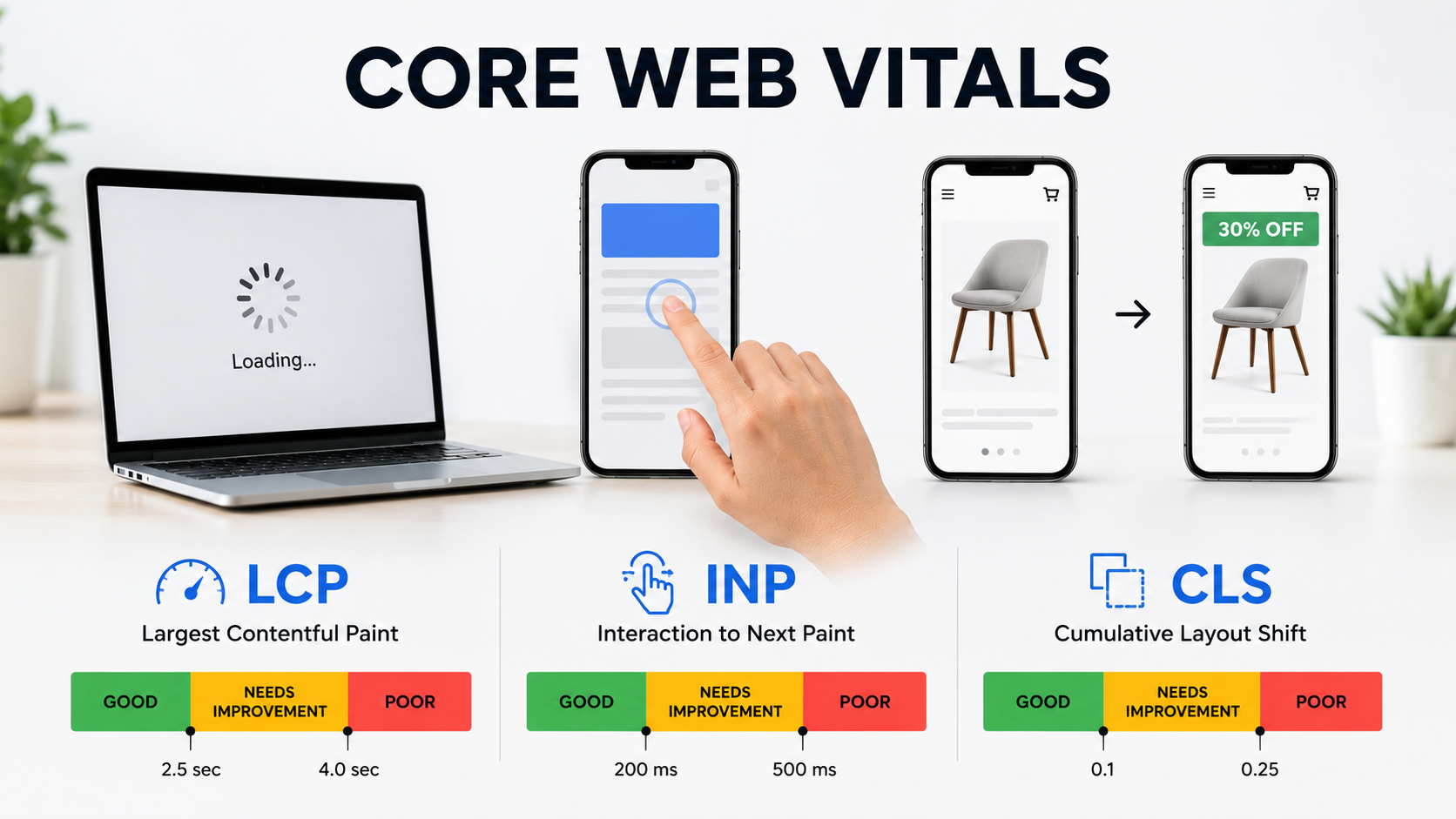
Core Web Vitals, Google’s metrics for loading speed, interactivity, and visual stability, are one part of what it calls page experience, and they factor into ranking. But Google’s own guidance is clear that relevant, helpful content is what Search prioritizes first; a fast page doesn’t outrank a more relevant one, though page experience becomes more likely to matter when several pages are otherwise comparably useful.
Organize Your Site Structure
A clear website structure benefits both users and search engines. Organize linked pages into sensible groups and apply internal linking to join associated material. It allows easier navigation and helps crawlers understand the connection between your pages.
Way 4: Optimize On-Page SEO
On-Page SEO is the practice of page-by-page optimisation for improved ranking in the search engines. The best content may not perform well without proper optimization.
Make Effective Title Tags and Meta Descriptions
The first thing seen by visitors in the search results will be the title tag. Therefore, it should explain your webpage in an explicit manner and include the main keyword. Likewise, a good meta description can convince the visitor to visit your webpage more than the competitors. Make it brief and attractive to read.
Header Tag Usage
Structuring your content with H1, H2, and H3 headings make your content clearer for readers and for search engines to process.
Add Internal Links
Connect to other webpages and blog articles inside your own website. These internal links assist with spreading authority throughout the whole site, enhance how people navigate around it, and push visitors toward looking at additional pages.
Optimize Images
Visuals enhance user experience yet may slow websites down when unoptimized.
Follow these best practices:
- Compress large images.
- Use descriptive file names.
- Add keyword-rich alt text.
- Opt for modern image formats where possible.
Focus on Search Intent
Simply create material that completely addresses what people are searching for rather than stuffing keywords repeatedly. Search engines value more whether material really benefits the user than how many keywords it contains.
Way 5: Build Quality Backlinks
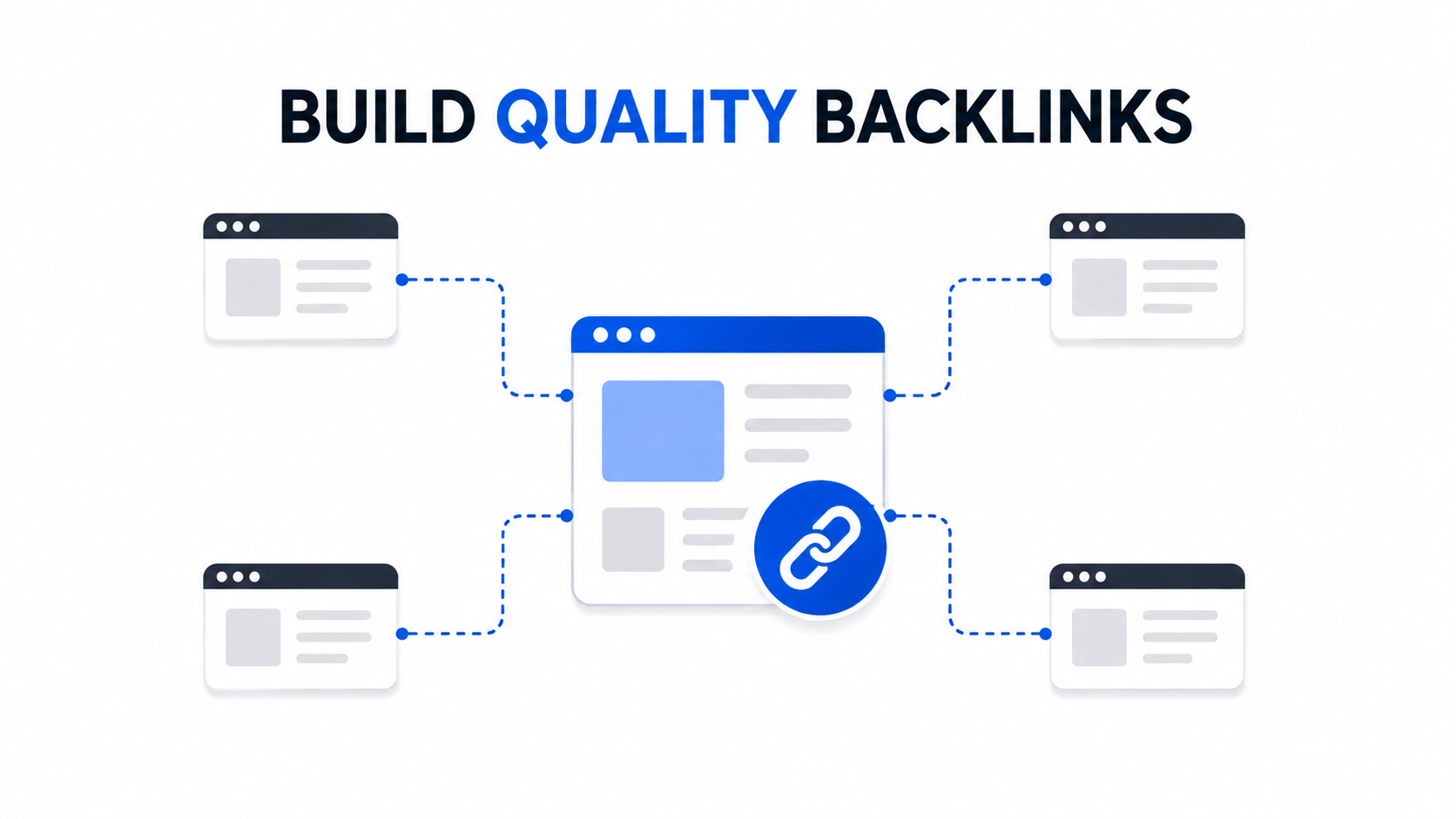
One of the strongest indicators for SEO still is backlinks. Search engines view your site as trustworthy and authoritative when trusted sites connect to your content. Research in the SEO industry reveals that usually better-ranking pages have good backlinks than those with few or none.
Ways to Earn Them
- Ask suppliers or manufacturers whose products you carry to link to your product or category page, not just their own site.
- Get listed in relevant local business directories.
- Pitch a genuinely useful resource, a buying guide, a comparison, an original bit of data about your niche, to smaller blogs or newsletters in your space, rather than generic guest posts.
- Find broken links on other sites and offer your own content as a replacement.
- Avoid buying or selling links or joining link schemes; Google may ignore or devalue unnatural links, and serious violations can lead to manual action.
Way 6: Improve User Experience
Search engines look for websites with positive user experience. Your rankings might drop over time if users click away right after they get to your site.
Simplify navigation
Individuals ought to be able to locate goods, sections, and significant websites fast.
Make it Readable.
Use small paragraphs, concise headings, bullet points, and steer clear of large blocks of text.
Keep People on Your Site
Give useful information right away, load pages quickly, and include links to other sites to encourage exploration among consumers.
Enhance for Phones
Every website has to load quickly and look nice on tiny displays since most searches nowadays are done on phones. To be more SEO friendly over time, improve the experience for your users. This will result in more interactivity and higher revenue.
Way 7: Promote Content Through Various Channels
Creating good content isn’t enough on its own. It also needs to be shared, and often more than once.
These channels do not directly count as organic search traffic, but they increase discovery and can lead to links, branded searches, and returning visitors.
Share on Social Media

Post where your audience is actually active, whether that’s LinkedIn, Facebook, Instagram, X, or elsewhere. If you’re not sure which platform fits, test a few before committing.
Build an Email List
Newsletters bring past visitors and past customers back to your site whenever you add something new.
Participate in Online Communities
Answer questions in forums and communities where you can genuinely help people. Share your own store only when it’s actually relevant to the conversation.
Repurpose Existing Content
Turn a product page or buying guide into:
- Short videos
- Infographics
- Social media posts
- Email newsletters
- Downloadable guides
Repurposing helps you reach different audiences without starting from scratch each time.
How to Measure Organic Traffic Growth
Google Search Console
Track organic clicks, impressions, CTR, and average search position. Queries with high impressions but low clicks are worth checking your title and meta description for, though position, intent match, ads, and other search features affect click-through rate too, so don’t assume the copy is always the culprit.
Google Analytics 4
Google Analytics 4 (GA4) helps track organic traffic growth by monitoring organic sessions, engaged users, top landing pages, and conversions. Comparing these metrics over time shows whether your SEO efforts are increasing traffic and driving valuable actions.
Keyword Rankings
Track your target keywords regularly to see how their search positions change over time. Improved rankings indicate better search visibility and stronger SEO performance.
Organic Conversions
Organic conversions measure the leads, sales, sign-ups, and other valuable actions generated through organic search. This helps you understand how effectively your SEO traffic contributes to your business goals.
How Store.link Can Support SEO Growth
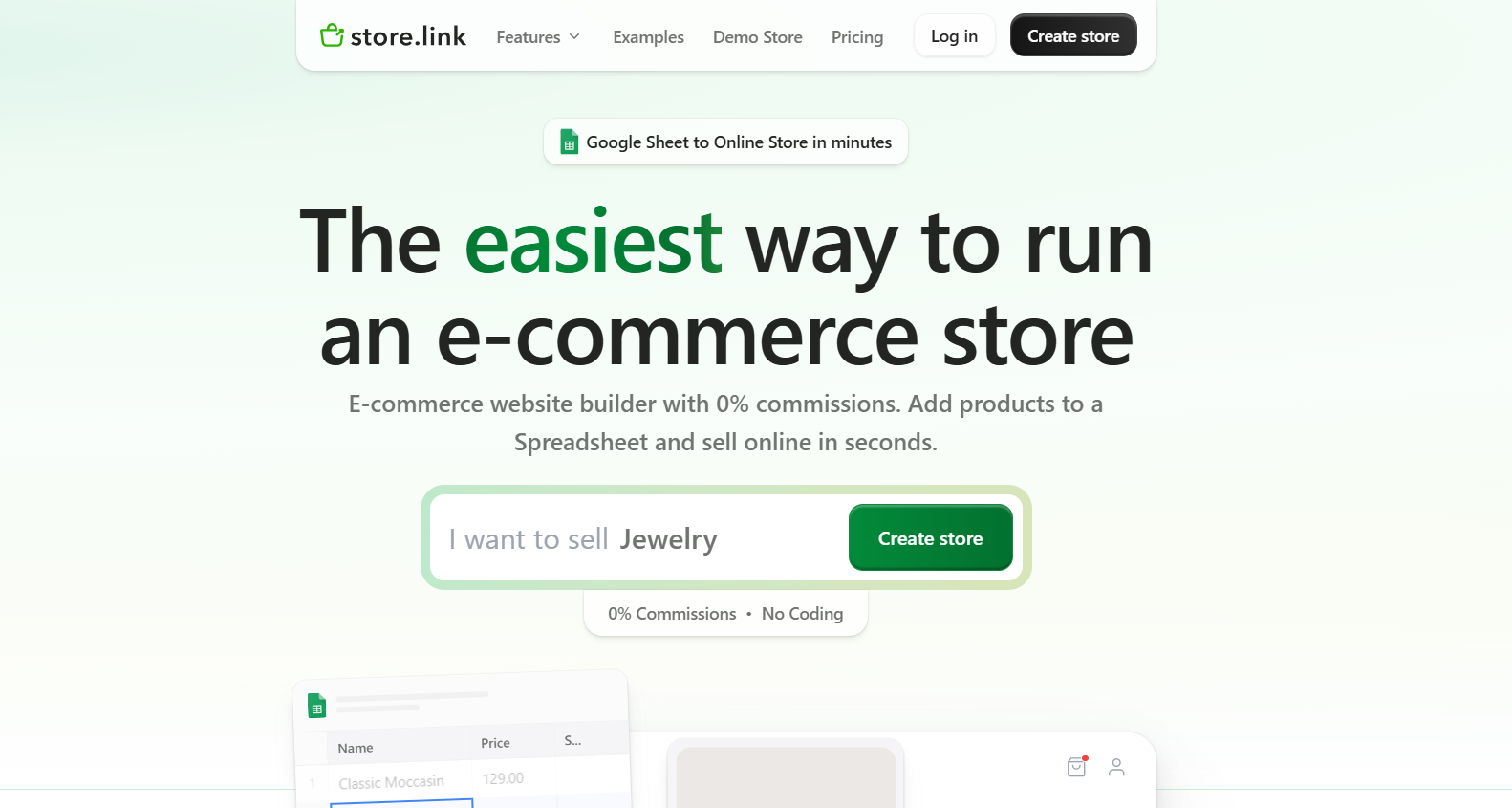
Store.link helps businesses build and manage an online store while supporting their SEO efforts. Its simple features make it easier to manage products, create content, and provide a better experience for visitors.
- Google Sheets integration: Manage products, pricing, and inventory easily through Google Sheets.
- Mobile-friendly storefront: Provide a smooth experience for users across mobile devices.
- Customizable pages: Create and optimize pages with SEO-friendly content.
- Simple store management: Spend less time managing your store and more time on content and marketing.
- No-code setup: Launch and manage your online store without technical or coding skills.
These features make Store.link a practical option for businesses that want to build an online store and support long-term organic growth.
Conclusion
Understanding what organic traffic is only constitutes step one. To actually employ these methods of boosting website traffic, one has to have the patience and dedication to provide value to their audience. Through keyword research, high-quality content creation, technical and on-page SEO optimization, building high-quality backlinks to the site, improving user experience and encouraging visitors to stay on the page, and finally promoting content, one can generate sustainable organic traffic.
For anyone looking to set up or improve their online store, Store.link can help design a fast, easy-to-use website that will be SEO-friendly in the long run. As it is built on Google Sheets and free of charge, Store.link helps its users manage their stores efficiently.
FAQs
What is the fastest way to increase organic traffic?
Optimize existing content, target long- target keywords, boost site velocity, and release useful material regularly. Though certain changes might show up inside weeks, lasting SEO expansion typically requires many months.
What are the best tools to monitor organic traffic?
Some of the most popular tools include:
- Google Analytics 4
- Google Search Console
- Ahrefs
- SEMrush
- Moz
These tools help track site metrics, keyword positions, click volumes, and overall site performance.
Does AI-generated content help increase organic traffic?
Google has stated that it evaluates content based on quality and helpfulness, not on whether it was written by a person or a tool. The practical risk is publishing unreviewed, generic content at scale. Have a person fact-check and add real detail before anything goes live.
Is SEO dead or evolving in 2026?
SEO keeps changing rather than disappearing. Search continues to prioritize genuine usefulness, page quality, and user experience over shortcuts. Sites that consistently provide real value continue to earn organic results.