


If you're thinking about starting your own online clothing store, you're already taking the first step toward building something meaningful. The opportunity has never been bigger: fashion e-commerce now accounts for an estimated $217 billion of the U.S. apparel market, and 43% of American consumers already purchase clothing online. Fashion is one of the most personal ways people express themselves, and turning that passion into an online business is more achievable today than ever before.
Maybe you’ve noticed a gap in the market, sketched out designs, curated outfits, or followed trends and thought, I could do this better. What once felt like an idea can now become a real brand with the right tools and a clear plan.
You don’t need a technical background, a large team, or a massive upfront budget to get started. With modern ecommerce platforms such as Store.link, reliable suppliers and a strong sense of style, you can launch a professional clothing store that resonates with customers across the U.S.
In this guide, we’ll walk you through each essential step, from choosing your niche and sourcing products, to marketing your brand effectively. Whether you’re starting small or planning to scale, this article will help you move forward with confidence.
How to start your own Clothing online store
- Define Your Clothing Niche
- Create Your Business Plan
- Source Your Products
- Build Your Clothing Online Store
- Create Compelling Product Content
- Launch Your Marketing Strategy
- Manage Operations and Deliver Outstanding Customer Service
- Conclusion
- Frequently Asked Questions
1. Define Your Clothing Niche

Before selecting products or designing your store, you need to be clear about what you will sell and who you are trying to reach.
Decide what makes your brand different. This could be anything from streetwear and Y2K fashion to luxury basics, plus-size apparel, or sustainable clothing. Your unique angle helps your brand stand out in a crowded market.
Study other brands in your niche. Exploring existing U.S. brands in your chosen space helps you understand what they do well and what they fail to deliver. Reading reviews, studying their product range, and noticing how they communicate with customers provides insights into where your store can differentiate.
After choosing a niche, shape your brand identity by selecting a color palette, tone of voice, and aesthetic that will appeal to U.S. shoppers. Consistency across your website, social media, and packaging is essential in building trust and recognizability. Strong branding matters, especially as a significant share of Americans purchase clothing online each year (capitaloneshopping.com).
2. Create Your Business Plan
A strong business plan keeps your ideas organized and helps you stay focused. Begin by clearly defining where you want your business to be in the next six to twelve months. Then outline expected costs, including inventory, packaging, website fees, marketing, taxes, and shipping.
Because you are operating in the U.S., you’ll also need to decide on a business structure. Many small online retailers begin as sole proprietorships because setup is simple, while others form LLCs for liability protection and cleaner financial separation. Clarifying these details early makes future growth easier to manage.
3. Source Your Products
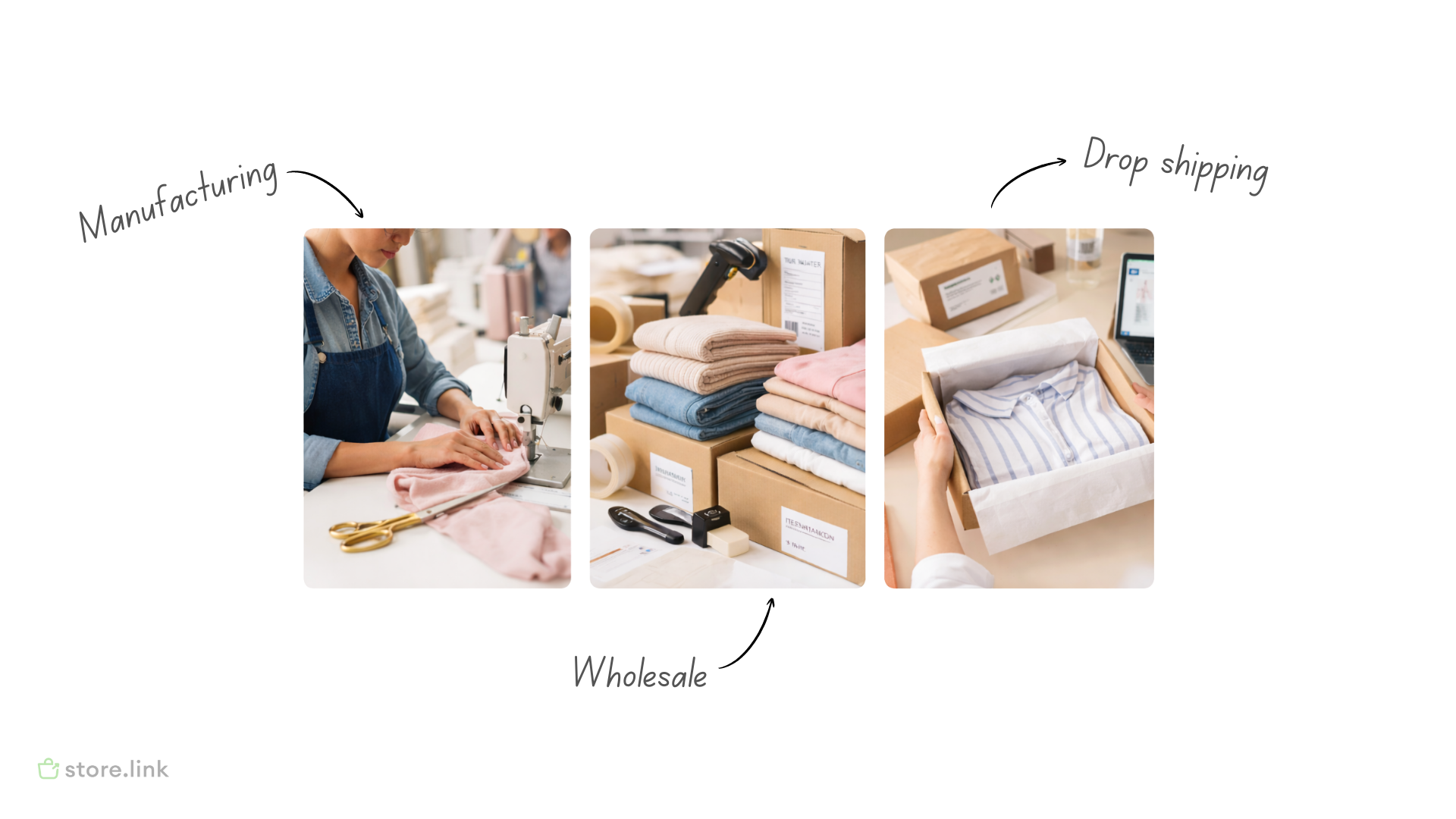
Your products are the heart of your clothing store, so quality matters.
- Manufacturing gives you full control but requires a larger investment.
- Wholesale allows you to buy bulk items from existing brands.
- Drop shipping lets you sell without holding inventory but usually provides lower profit margins.
Search supplier marketplaces, attend trade shows, or contact trusted manufacturers directly. Always review their reliability, certifications, and production capabilities.
No matter which path you choose, always order samples. Check fabric quality, stitching, returns policies, and consistency in sizing. Since the U.S. apparel market (online + offline) was estimated at US$365.7 billion in 2024 (capitaloneshopping.com), even small quality improvements can help your store win repeat buyers.
4. Build Your Clothing Online Store
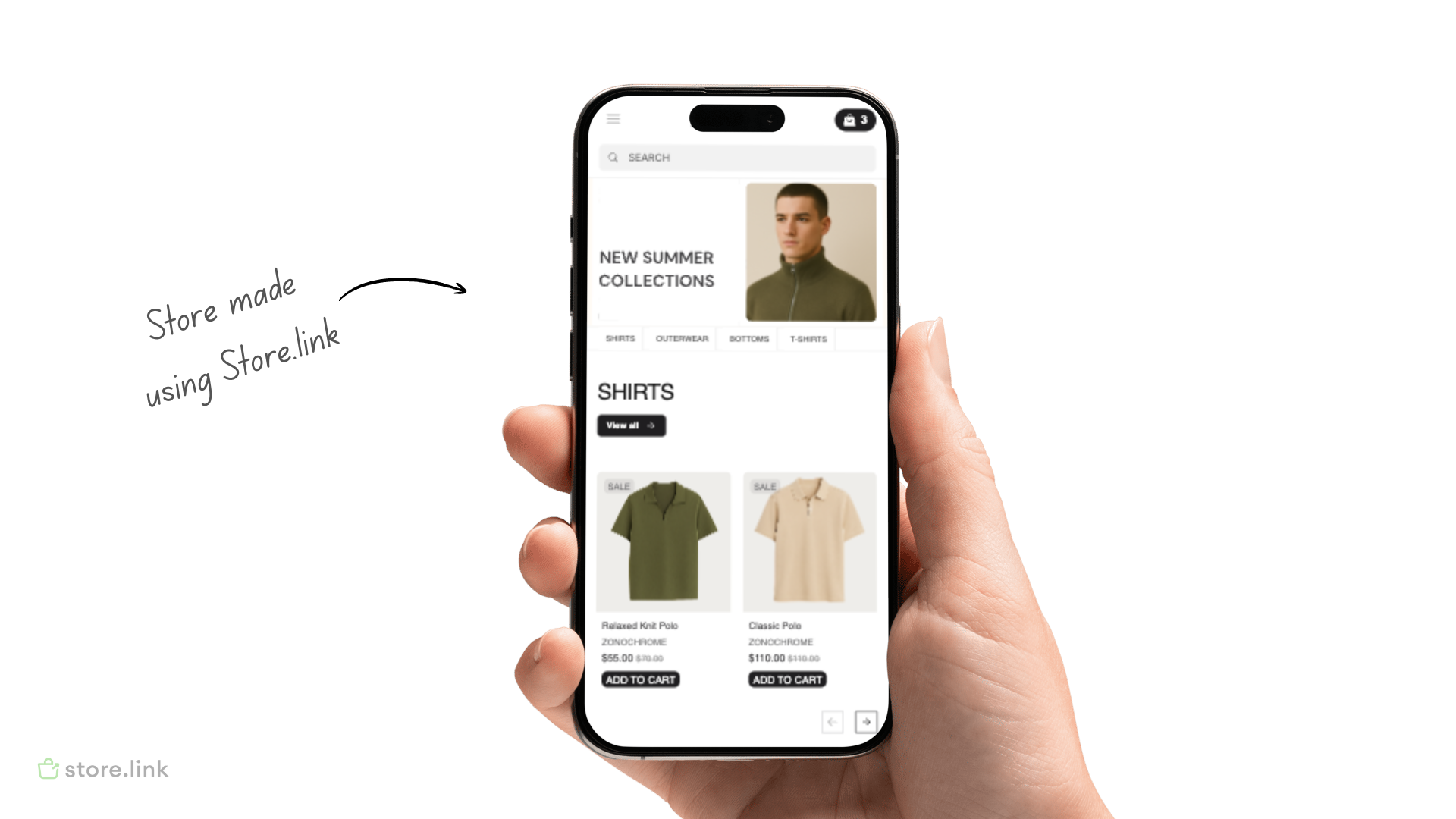
Your website is where customers interact with your brand, so choosing the right ecommerce platform is important.
Building an online store no longer requires coding or complex tools.
If you’re just starting out, Store.link offers one of the easiest ways to run an e-commerce store. You can create your store here by simply describing what you want to sell, and your store is generated instantly.
Store.link turns Google Sheets into an online store in minutes. Once your store is ready, you manage everything through a spreadsheet, where each product is added as a row and updates go live in real time.
This approach removes the need for complex dashboards or technical setup. You can add products to a spreadsheet and instantly get a mobile-ready, SEO-friendly online shop with 0% commissions.
Store.link also provides different styles and customization options, so you can adjust your store theme, sections, and design to match your brand. Whether you’re building a clothing store, a wholesale catalog, or a quick checkout experience, you can tailor the store based on your needs without coding.
Store.link stores are SEO-optimized and mobile-friendly by default, so you don’t need to configure technical settings early on. This allows you to focus on adding products, pricing, and branding.
Add payment options U.S. customers expect, including major credit cards and PayPal. Clearly define shipping timelines and costs, since delivery expectations vary by state. Transparent policies help reduce abandoned carts and build trust.
As online apparel shopping continues to grow in the U.S., having a smooth and reliable store setup is essential. A simple, well-structured store helps you launch quickly, test products easily, and start selling without technical friction.
5. Create Compelling Product Content
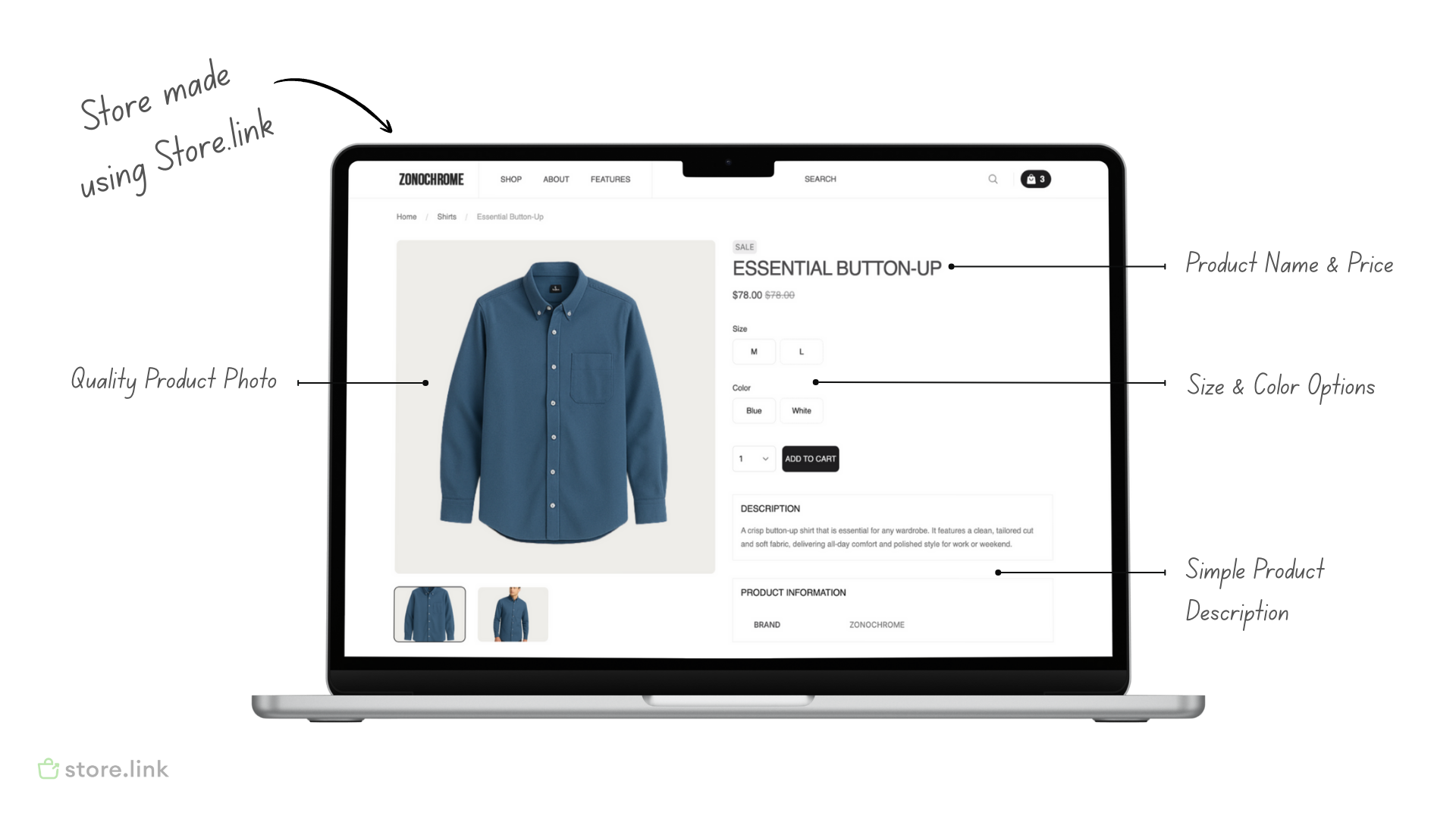
Good visuals and descriptions help customers trust your store. Because customers cannot touch or try on your products, presentation becomes crucial.
Use natural lighting and photograph each item from different angles. Lifestyle photos can help customers imagine how the product looks when worn.
Write detailed product descriptions. Describe fabric type, fit, features, and care instructions. You can also include styling suggestions to make your products more appealing.
Since sizing varies widely across brands, include a complete size guide and tips for choosing the right fit. Clear descriptions reduce return rates and help shoppers feel confident.
6. Launch Your Marketing Strategy
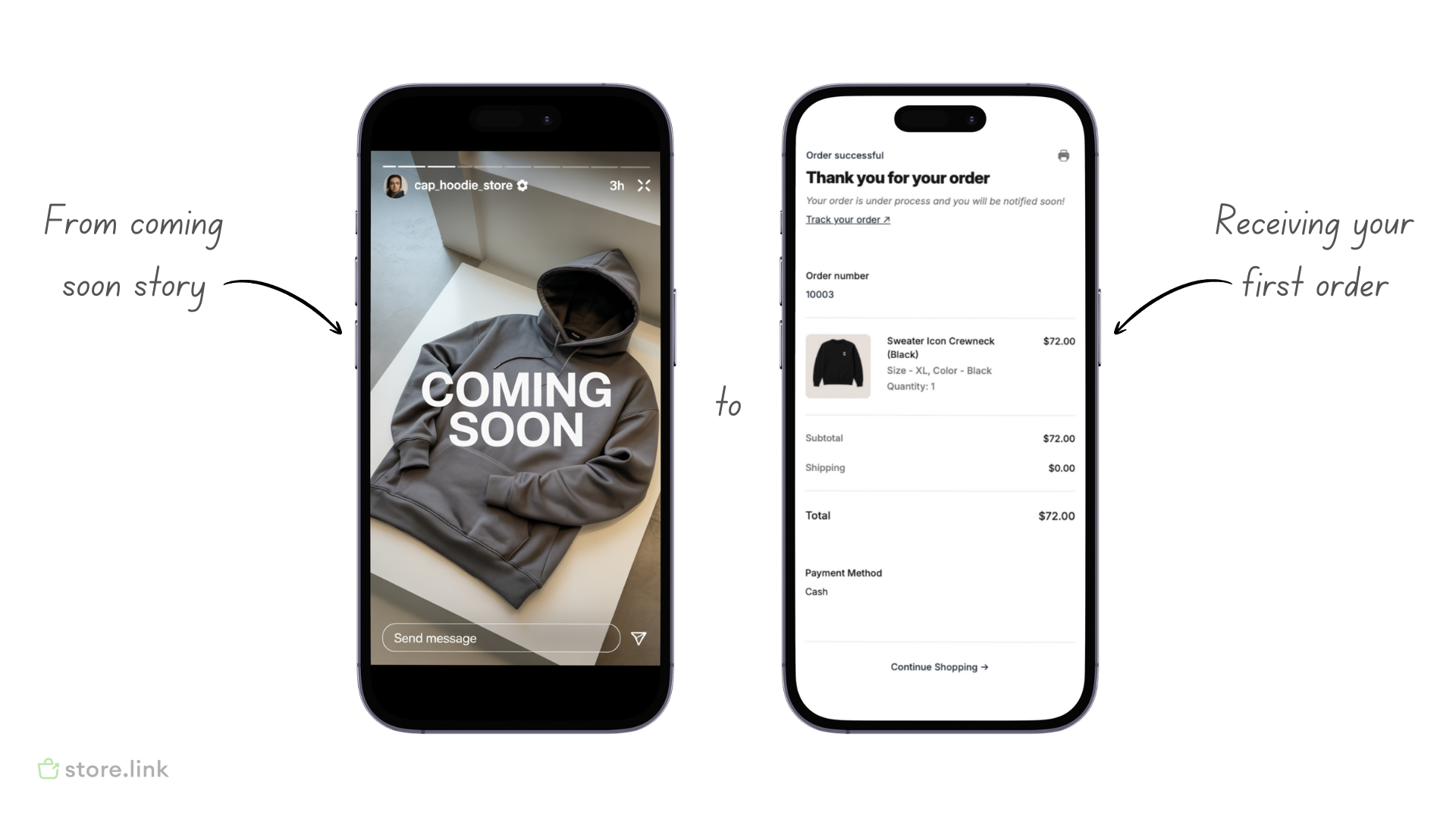
Marketing is essential for driving traffic and building brand awareness, so you’ll need a strategy that resonates with American audiences. Social platforms such as Instagram, TikTok, and Pinterest remain essential for visual storytelling, showing new collections, and sharing customer content. Collecting email subscribers early is also helpful, since email campaigns allow you to announce drops, restocks, and promotions directly.
Influencer partnerships with U.S. creators can help your store reach new audiences more quickly. Paid advertising through Meta, TikTok Ads, or Google Ads can also accelerate growth if you target specific demographics or interests.
7. Manage Operations and Deliver Outstanding Customer Service
Smooth operations help you maintain a professional reputation. Track inventory carefully, respond promptly to customer messages, and provide clear updates on shipping. Monitor key performance indicators like best-selling items, website conversion rates, and cart abandonment. Use this data to refine your catalog and marketing.
A transparent returns and exchanges policy is especially important because American shoppers expect clarity and convenience. Building trust in these operational areas can be one of the biggest long-term advantages for a new clothing brand.
Conclusion
Starting an online clothing store takes planning, creativity, and persistence. But, it’s also one of the most rewarding ways to turn a passion for fashion into a real business. By clearly defining your niche, building a strong brand, sourcing quality products, and focusing on customer experience, you set a solid foundation for long-term growth. The U.S. market is competitive, but it also offers enormous opportunity for brands that are authentic, consistent, and customer-focused. Treat your store as an evolving project, learn from your data and customers, and improve step by step. With the right strategy and dedication, your online clothing store can grow from a simple idea into a trusted brand shoppers return to again and again.
Frequently Asked Questions
What is the easiest way to create an online clothing store as a beginner?
The simplest way to create an online clothing store is to use a no-code ecommerce builder like Store.link. You can manage your products, prices, images, and descriptions directly from a Google Sheet, and your store is generated automatically. This makes it beginner-friendly, fast to launch, and ideal if you don’t have technical or design experience.
How many products do I need before launching my clothing store?
You don’t need a large catalog to start. Many successful U.S. clothing brands launch with 5 to 10 core items such as t-shirts, hoodies, dresses, or basics. Smaller, curated collections often feel more intentional and premium. You can always add more products later as you test demand and grow.
What photos work best for selling clothing online?
High-quality photos are critical for clothing stores. Use natural lighting, show products from multiple angles, and include lifestyle or on-model shots so customers can see fit and proportions. Close-ups of fabric texture and details also help build trust. Platforms like Store.link support multiple images and videos per product, which improves conversion rates.
Can I accept payments on my clothing website?
Yes. Most ecommerce platforms, including Store.link, support trusted payment providers such as Stripe, PayPal, Square, and Razorpay. This allows U.S. customers to pay using credit cards or digital wallets they already trust, making checkout smoother and reducing cart abandonment.
How can I customize the look of my clothing website?
You can customize your store by uploading your logo, choosing brand colors, and adjusting layouts to match your clothing brand’s aesthetic. For deeper customization, Store.link allows custom scripts and CSS so you can change fonts, product card layouts, or add subtle animations. Many apparel brands keep designs clean and minimal to highlight the products.
What are the best ways to market a new online clothing store?
Visual platforms perform especially well for fashion. Instagram, TikTok, and Pinterest are ideal for outfit styling, try-on videos, and behind-the-scenes content. Collaborating with U.S.-based micro-influencers can help build trust quickly. Email or WhatsApp marketing is also effective for announcing new drops, restocks, and promotions.