


Quick commerce (Q-commerce) is a fast-delivery model that fulfills orders in 10 to 60 minutes using small, local fulfillment centers close to the customer. It is best understood as a specialized subset of ecommerce built for speed, not a separate industry. Traditional ecommerce ships from regional or national warehouses, generally takes anywhere from same-day to about a week, and offers a much wider product range in exchange for that longer wait.
Table of Contents
1. Introduction
2. What is Quick Commerce?
3. What is E-commerce?
4. Quick Commerce vs E-commerce at a Glance
5. Differences Between E-Commerce and Q-Commerce
6. Advantages of Quick Commerce
7. Which Business Model Should You Opt?
8. Why Store.link Is a Smart Choice
9. Conclusion
10. FAQs
What is Quick Commerce?
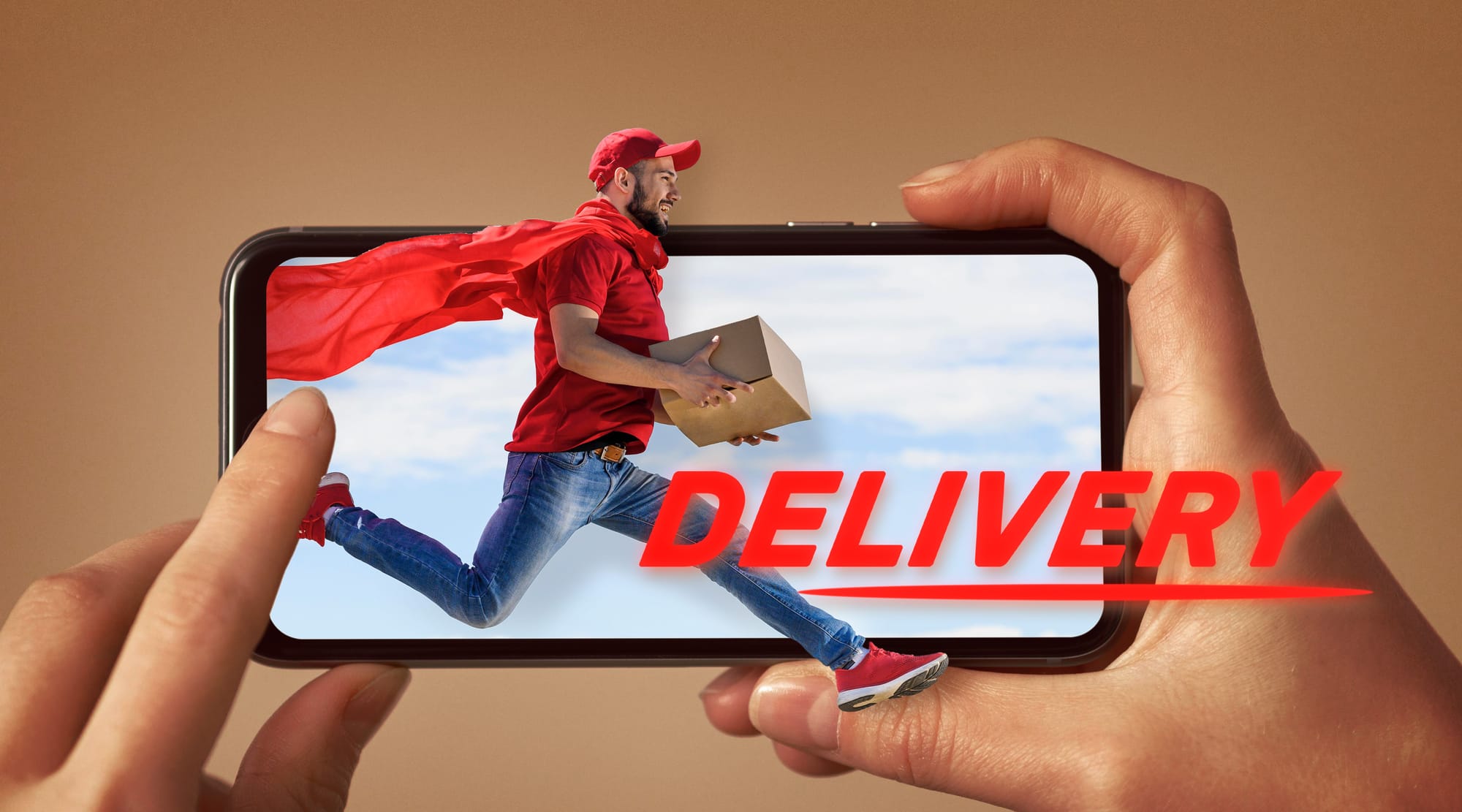
Quick commerce, or Q-commerce, is a delivery model that fulfills online orders within minutes rather than days. It sits inside the broader ecommerce industry, but instead of shipping from one large warehouse, quick commerce retailers hold inventory in small local fulfillment centers, sometimes called dark stores or micro-fulfillment centers, positioned close to where customers live.
Typical delivery times are:
- 10 minutes
- 20 minutes
- 30 minutes
- Up to 60 minutes
Quick commerce is commonly used for:
- Groceries
- Medicines
- Snacks
- Personal care products
- Household essentials
- Pet supplies
- Baby products
Customers choose quick commerce when they need something immediately and are often willing to pay a delivery fee for that speed.
What Is Traditional Ecommerce?
Traditional ecommerce is the standard model of buying and selling online: browsing a catalog, placing an order, and having it shipped to your address. Products are typically held in regional or national warehouses and shipped through courier networks rather than fulfilled from a nearby micro-fulfillment center.
Delivery timelines vary more than is often assumed. Depending on the retailer, courier, and location, ecommerce orders can arrive:
- Same day or next day, for some retailers and locations
- Within two to three days, which remains the most common range
- Up to a week or more, for remote areas or larger items
Examples include:
- Fashion and apparel stores
- Electronics retailers
- Furniture and home goods websites
- Bookstores
- Beauty brands
- General marketplaces
Because traditional ecommerce isn’t limited to a tight local delivery radius, it can carry a far larger and more varied product catalog than quick commerce.
Why Quick Commerce Is Growing So Fast
It is crucial to understand the key trends which lead to the development of Q-commerce. The customers are used to the idea of getting any service quickly and easily.
Some of the biggest growth drivers are:
- Increased smartphone usage
- Higher internet penetration
- Urban population growth
- Busy lifestyles
- Demand for convenience
- Better last-mile delivery technology
Quick Commerce vs Ecommerce Comparison Table
Differences Between E-Commerce and Q-Commerce
Differences Between E-Commerce and Q-Commerce is that sites allow users to shop online; the two have significant differences in their operations. Notably, understanding the differences is critical in determining which method is better for the companies.
1. Delivery Speed
The key difference between them is clear from the name. Advantages of Quick ecommerce is that it offers fast delivery of goods to customers within a few minutes, while conventional e-commerce usually takes several days.
Quick Commerce:
- 10–60 minute delivery
- Designed for urgent purchases
- Uses nearby fulfillment centers
- Real-time order processing
Traditional E-commerce:
- 1–5 day delivery
- Best for planned purchases
- Ships from regional warehouses
- Scheduled dispatch and courier networks
For customers who suddenly need groceries, medicine, or household essentials, waiting several days simply isn’t practical.
2. Product Range
Product selection is another major difference. Quick commerce keeps a carefully selected inventory of fast-moving products. Traditional e-commerce focuses on offering as many products as possible.
For instance, a quick commerce application could offer milk, bread, batteries and medicines whereas an e-commerce marketplace would provide a choice of laptops and furniture.
3. Inventory Management
Inventory is a vital component of both sites, but it is not the same for the two. In particular, quick commerce relies on inventory because customers always want to buy items online without visiting physical stores.
Key features are:
- Live stock updates
- Frequent replenishment
- Local inventory
- Fast-moving products
Traditional e-commerce typically uses:
- Central warehouses
- Bulk inventory
- Scheduled stock updates
- Large storage capacity
Businesses opting Q-commerce ought to invest in accurate stock oversight to avoid disappointing customers.
4. Warehousing and Fulfillment
The storage strategy is completely different.
Quick Commerce
Products are stored inside multiple micro-fulfillment centers located close to customers. These facilities are designed for speed rather than storage capacity.
Traditional E-commerce
Items are held in bigger distribution centres that reach across multiple urban areas and, in some cases, entire nations. Orders are packed in batches before being shipped. This makes traditional e-commerce more efficient for businesses selling thousands of different products.
5. Customer Expectations
Customer expectations also vary.
Quick commerce customers expect:
- Immediate delivery
- Accurate stock availability
- Live order tracking
- Minimal waiting time
Traditional e-commerce customers prioritize:
- More product choices
- Better pricing
- Product reviews
- Flexible shipping options
The purchase journey is different because the customer’s goal is different.
6. Operational Costs
Quick commerce requires significantly higher operational investment.
Businesses need:
- Multiple fulfillment centers
- Delivery riders
- Route optimization software
- Real-time inventory systems
Traditional e-commerce generally operates with:
- One or more large warehouses
- National courier partners
- Scheduled deliveries
- Lower last-mile costs
Although Q-commerce can generate frequent repeat purchases, its operating costs are usually higher.
7. Technology Requirements
Technology is the backbone of both models.
Quick Commerce relies on:
- Live inventory management
- GPS tracking
- Route optimization
- Mobile ordering
- Instant notifications
Traditional E-commerce focuses on:
- Product catalog management
- Warehouse management
- Order processing
- Payment gateways
- Shipping integrations
Choosing the right platform helps businesses manage these operations efficiently.
8. Profit Margins
Profit margins are shaped by what you sell and the level of customer demand.
Quick commerce often earns through:
- Frequent purchases
- Delivery charges
- Convenience value
- Subscription programs
Traditional e-commerce usually sees earnings from:
- Larger order values
- Bulk sales
- Lower shipping costs
- Wider product selection
Neither model is universal, and the choice depends on the company’s business model and customer expectations.
Advantages and Disadvantages of Quick Commerce

Advantages
- Faster fulfillment gives customers what they need within the hour instead of within the week.
- Greater convenience removes the need to plan purchases in advance.
- Higher purchase frequency, since low-friction, fast delivery encourages repeat and impulse orders.
- Better availability for urgent needs, particularly for groceries, personal care, and (where locally permitted) pharmacy items.
- Stronger local market coverage, since dense fulfillment networks build a strong presence in the neighborhoods they serve.
Disadvantages
- High fulfillment costs, since maintaining a network of local centers and riders costs more per order than centralized shipping.
- Limited assortment, since local centers can only stock what fits their footprint and demand pattern.
- Inventory fragmentation, since stock is split across many small locations instead of managed centrally.
- Delivery density requirements, since the model only works economically where order volume per area is high enough to justify the infrastructure.
- Smaller basket sizes, which push margins per order lower.
- Difficult unit economics, since speed, density, and cost all have to balance for the model to be sustainable at scale.
The 10-minute segment accounted for 62.24% of Indian quick-commerce orders in 2025, according to Mordor Intelligence, illustrating how tightly the model is optimized around speed.
Which Model Is Right for Your Business?
The choice is dependent on the goods, customers, and objectives.
Quick commerce fits well if:
- You sell groceries, personal care, or other everyday essentials
- Your customers are concentrated in one city or a few dense neighborhoods
- Speed is your main competitive advantage
- Customers order frequently, in small amounts
Traditional ecommerce fits well if:
- You sell a wide range of products
- Your customers are spread across regions or countries
- Lower operating costs matter more than delivery speed
- Product variety matters more to your customers than how fast the order arrives
Many successful businesses now combine both approaches. For example, they offer standard shipping for most products while providing express delivery for selected high-demand items.
Why Store.link Is a Smart Choice for Modern Online Businesses
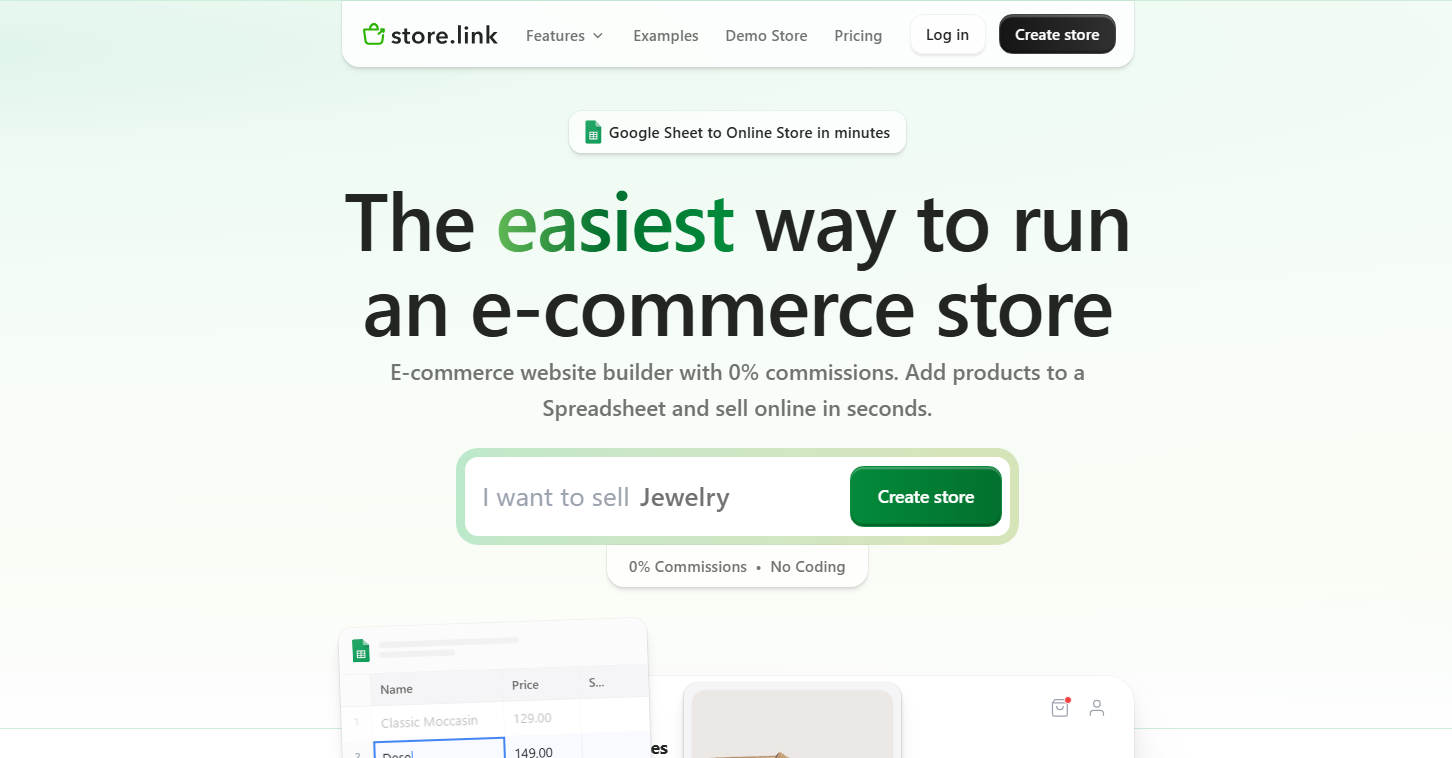
Whether you choose to go the traditional e-commerce or quick commerce route, what matters is that you can launch and manage a simple, intuitive online store that will help you scale your business. And that’s where Store.link comes in handy.
Store.link is a solution that is completely different from other website builders. Its interface is intuitive and doesn’t require any extra knowledge or additional payments. Store.link is free and based on Google Sheets, so creating and managing the store is as easy as using the spreadsheet app everyone is familiar with.
Launch an Online Store Faster
Many small businesses are reluctant to make the switch to selling online due to the complexities and costs of setting up a website. Store.link is an innovative solution which enables the user to design their own online store, display their products online, and manage their inventory. This eliminates the need for web developers and other costly software.
This makes it ideal for:
- Small businesses
- Local retailers
- Home-based businesses
- Startups
- Independent sellers
- Growing brands
Manage Products with Google Sheets
One of Store.link’s biggest advantages is its Google Sheets integration. Instead of manually updating products inside a complicated admin dashboard, you simply update your spreadsheet.
You can easily manage:
- Product names
- Prices
- Descriptions
- Images
- Inventory
- Categories
As your spreadsheet changes, your online store stays updated.
For businesses with frequently changing inventory, this saves significant time.
Supports Different Business Models
Every business is different: some sell hundreds of products across the country, and some make home deliveries right in their local area. Store.link is designed to work for all of them. Whether you want to open a traditional online store or try something new like quick commerce, Store.link will help you promote your goods without any extra effort.
Built for Growing Businesses
Many businesses start small before expanding. Store.link provides a flexible foundation that grows with your business.
You can:
- Add new products anytime.
- Update pricing in seconds.
- Organize collections easily.
- Share your online store instantly.
- Manage everything from one Google Sheet.
This flexibility is particularly useful for companies launching fresh products or testing seasonal collections.
Can Small Retailers Offer Faster Local Delivery?
Yes, but usually not by building a full quick commerce operation. Dark stores, dedicated riders, and route-optimization software are a significant investment that typically only makes sense at scale. A small or local retailer can still offer
meaningfully faster delivery by:
- Limiting delivery to a small radius they can service directly or through a local courier
- Keeping a smaller, faster-moving product selection for local orders
- Using WhatsApp or similar tools to confirm orders and coordinate delivery in real time
- Treating fast local delivery as an add-on to their main storefront, rather than a separate business
- This gets a retailer some of the convenience benefits of quick commerce, such as speed and local relevance, without taking on the infrastructure a true dark-store network requires.
Conclusion
Quick commerce is resetting customer standards, with faster service and more comfort as its key draw point. At the same time, traditional e-commerce is still taking the lead in the global retail market, promising more variety, more significant order value, and overall reach. The companies can combine the two methods, using traditional e-commerce for maintaining a broad selling base and quick commerce for fulfilling the most popular items.
This choice depends on the management’s strategic preferences, customer demand, and the company’s capabilities. If the company’s clients prioritize convenience, it has to invest in quick commerce to meet the demand. However, if the company advertises and sells various goods nationwide or internationally, choosing traditional e-commerce will be more beneficial in maximizing profits.
FAQs
Which model has higher ROI?
Neither of the two options is more profitable on a larger scale. Quick commerce enables higher retention rates and purchase frequency due to its convenience, but it requires significantly higher overhead expenditures such as local fulfillment and faster delivery. At the same time, traditional e-commerce entails higher average order value and lower delivery expenses, thus being more attractive to a broad audience.
What is the difference between e-commerce and quick commerce?
The biggest difference is delivery speed. Traditional e-commerce is about providing a wide range of goods with a delivery time of one or more days, while quick commerce aims to deliver goods in the shortest possible time with a network of nearby warehouses in local markets.
What is an example of quick commerce?
Popular examples of platforms include grocery delivery and quick merchant services. The critical difference between the two companies is that they provide their clients with food, grocery, medicines, cosmetics, and other goods within one hour. These goods are placed in local warehouses, which allows the companies to fulfill the orders so quickly.
Is Amazon e-commerce or quick commerce?
Amazon is mostly an e-commerce company because the company sells millions of goods on its portal worldwide. However, Amazon Fresh or same-day delivery applies the principles of quick commerce by providing expedited delivery service for certain goods in specific areas.