


Leading ecommerce websites in the US have helped shape how people shop online worldwide. In 2026, names like Amazon, Walmart, and eBay still lead, but how people shop and how small sellers reach them has shifted. Whether you are an entrepreneur choosing an online store builder, a merchant comparing an ecommerce website builder, or simply curious about the US ecommerce sites shaping the market, this guide ranks the ten leaders, explains what each does best and where each falls short, and shows how you can launch your own store for free.
Table of Contents
- Why the US Leads Global Ecommerce
- Top 10 Ecommerce Websites in US (2026)
- Comparison Table: The 10 Leaders at a Glance
- What the Leaders Have in Common
- How Small Businesses Can Compete with StoreLink
- Final Thoughts
- FAQ
Why the US Leads Global Ecommerce
The US is the largest and most influential ecommerce market in the world.
That scale matters. When a storefront, delivery model, or checkout experience works at this size, the rest of the world copies it. Same-day delivery, one-click checkout, AI-powered recommendations, and buy-online-pick-up-in-store all became global standards because the leading ecommerce websites in US proved them first.
Top 10 Ecommerce Websites in US (2026)
Here are the ten ecommerce websites in US that matter most this year, ranked by reach, sales volume, and influence, with what each does best and the drawback that matters most to sellers.
1. Amazon
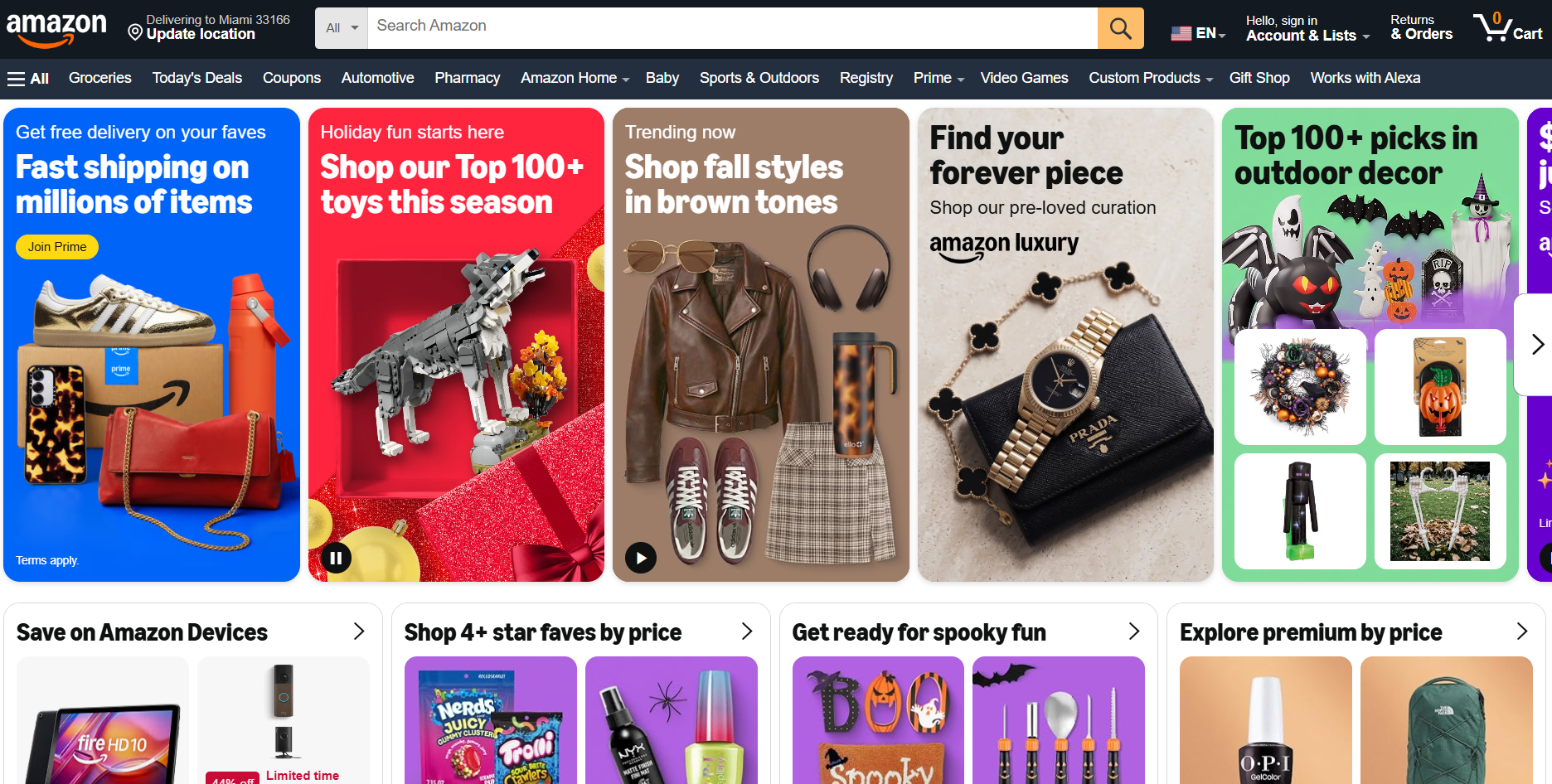
Amazon is the largest ecommerce website in the US and the clear category leader. It combines a huge marketplace with fast fulfillment through Prime, and it sells everything from books to groceries. For sellers, its size is both an opportunity and a challenge: you get access to a massive audience, but you compete on a crowded, commission-charging platform.
Best for: Almost every product category and the widest reach.
Drawback: High seller fees and brutal competition. You compete against thousands of near-identical listings and Amazon's own private-label brands, and your customers belong to Amazon, not to you.
2. Walmart
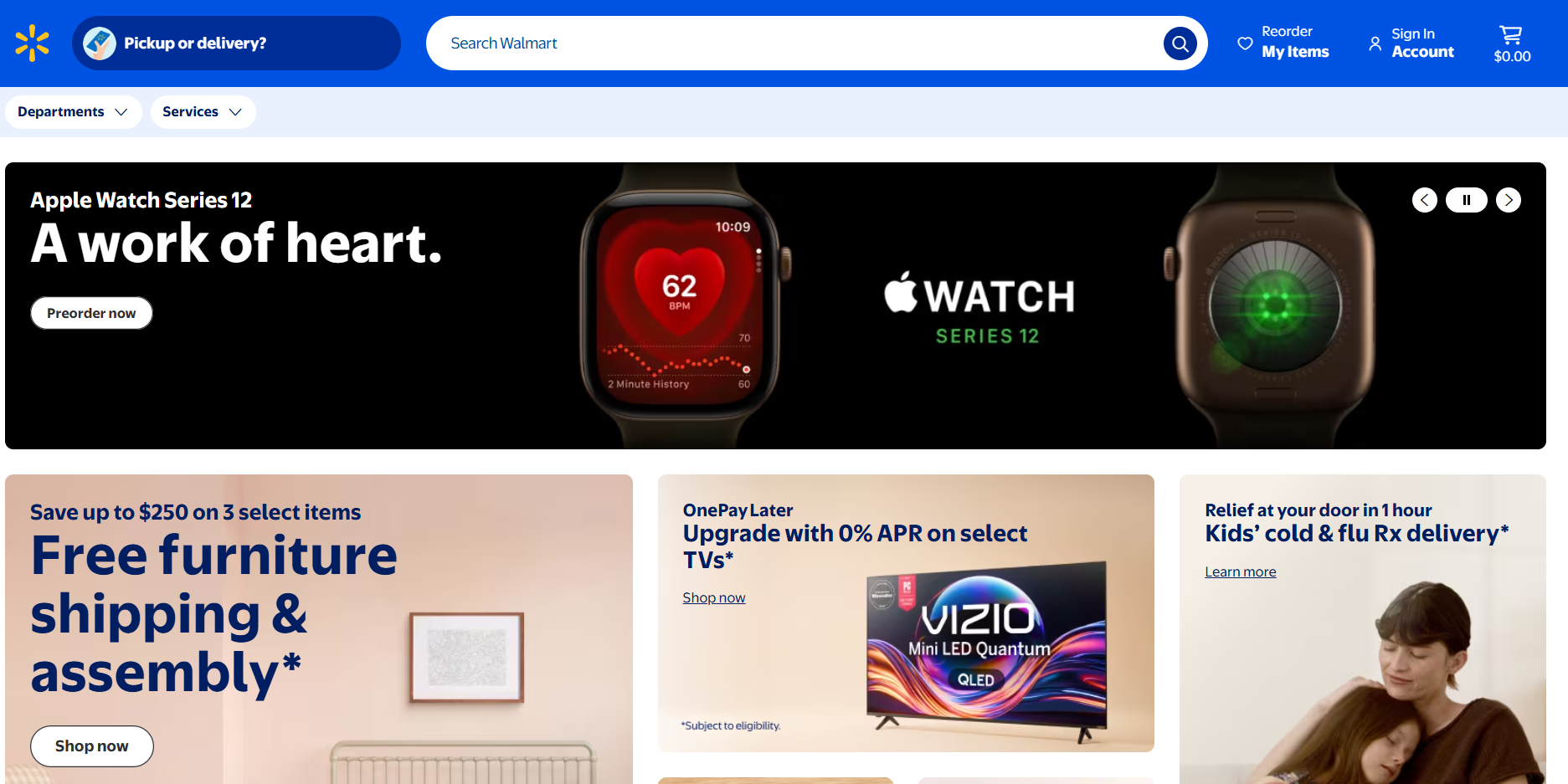
Walmart is the biggest retailer in the world, and its online business is now the second-largest among ecommerce websites in US. It leans on thousands of stores to offer cheap or same-day delivery and easy in-store pickup, especially for groceries and household essentials.
Best for: Groceries, everyday essentials, and value shopping.
Drawback: A curated marketplace with a strict seller application and approval process. Approval is not automatic, and price-matching pressure keeps margins tight.
3. eBay
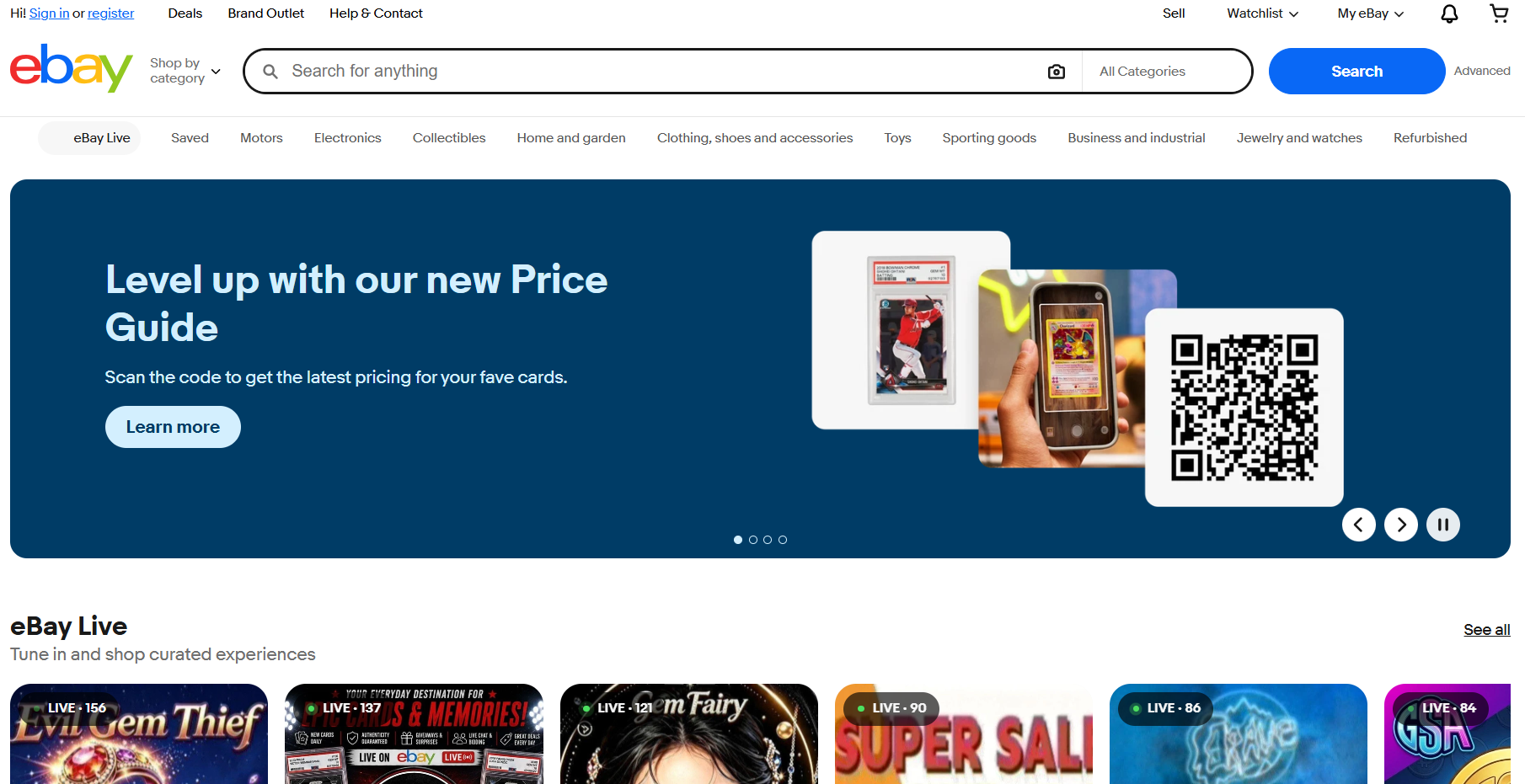
eBay pioneered online auctions and remains a top destination for resale, refurbished items, collectibles, and auto parts. It is still one of the most popular ecommerce websites in US for buying and selling second-hand and hard-to-find goods.
Best for: Used, refurbished, collectible, and niche products.
Drawback: Fees stack up, listing fees plus final-value fees on each sale, and the auction format makes pricing unpredictable for sellers.
4. Temu
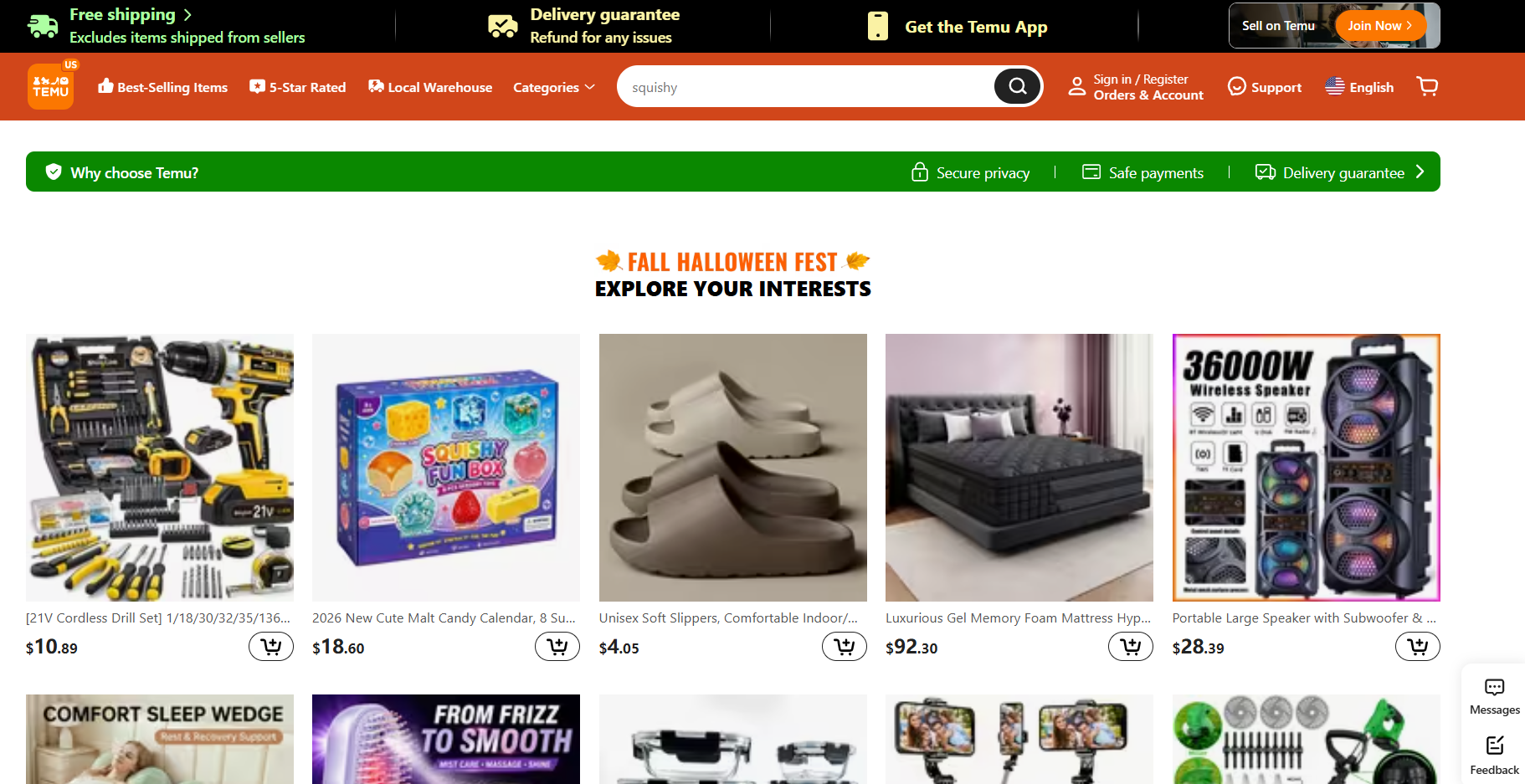
Temu entered the US market in 2022 and now sits fourth among US ecommerce sites by traffic, built on aggressively low prices and heavy advertising. Its Local Seller Program, launched in 2024, lets US-based businesses list and ship domestically instead of shipping from overseas.
Best for: Very low-cost general merchandise and impulse browsing.
Drawback: Competition is almost entirely on price. In Temu’s fully managed model, the platform rather than the seller controls how products are priced, so you trade pricing power for access to the audience.
5. Target
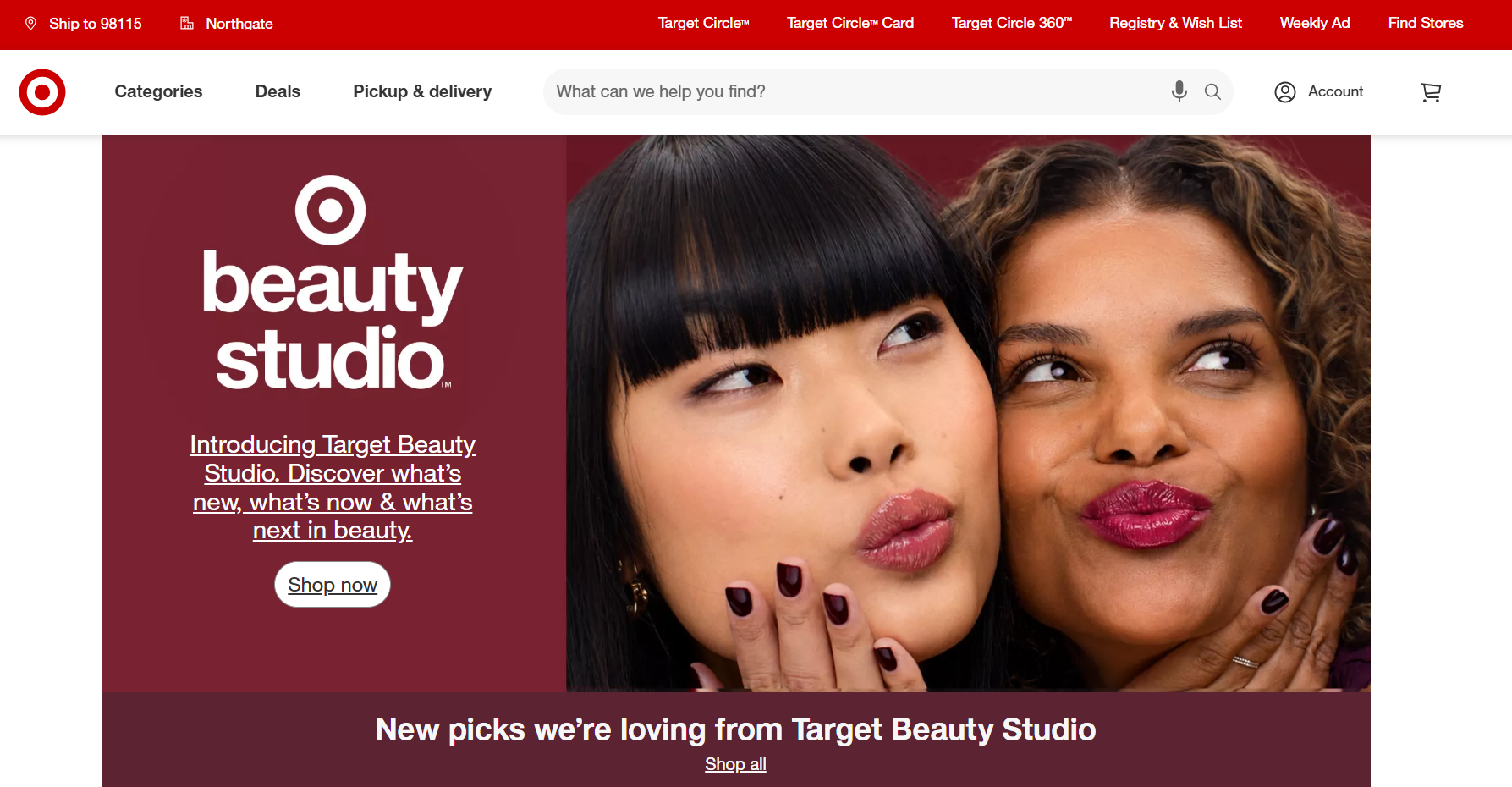
Target pairs a strong app and website with thousands of physical stores, which powers same-day pickup and delivery through services like Drive Up. It is one of the leading ecommerce websites in US for omnichannel shopping.
Best for: Home goods, apparel, and same-day pickup.
Drawback: Its third-party marketplace, Target Plus, is invitation-only, so most small sellers cannot list there. The catalog stays focused on home and apparel categories.
6. Etsy
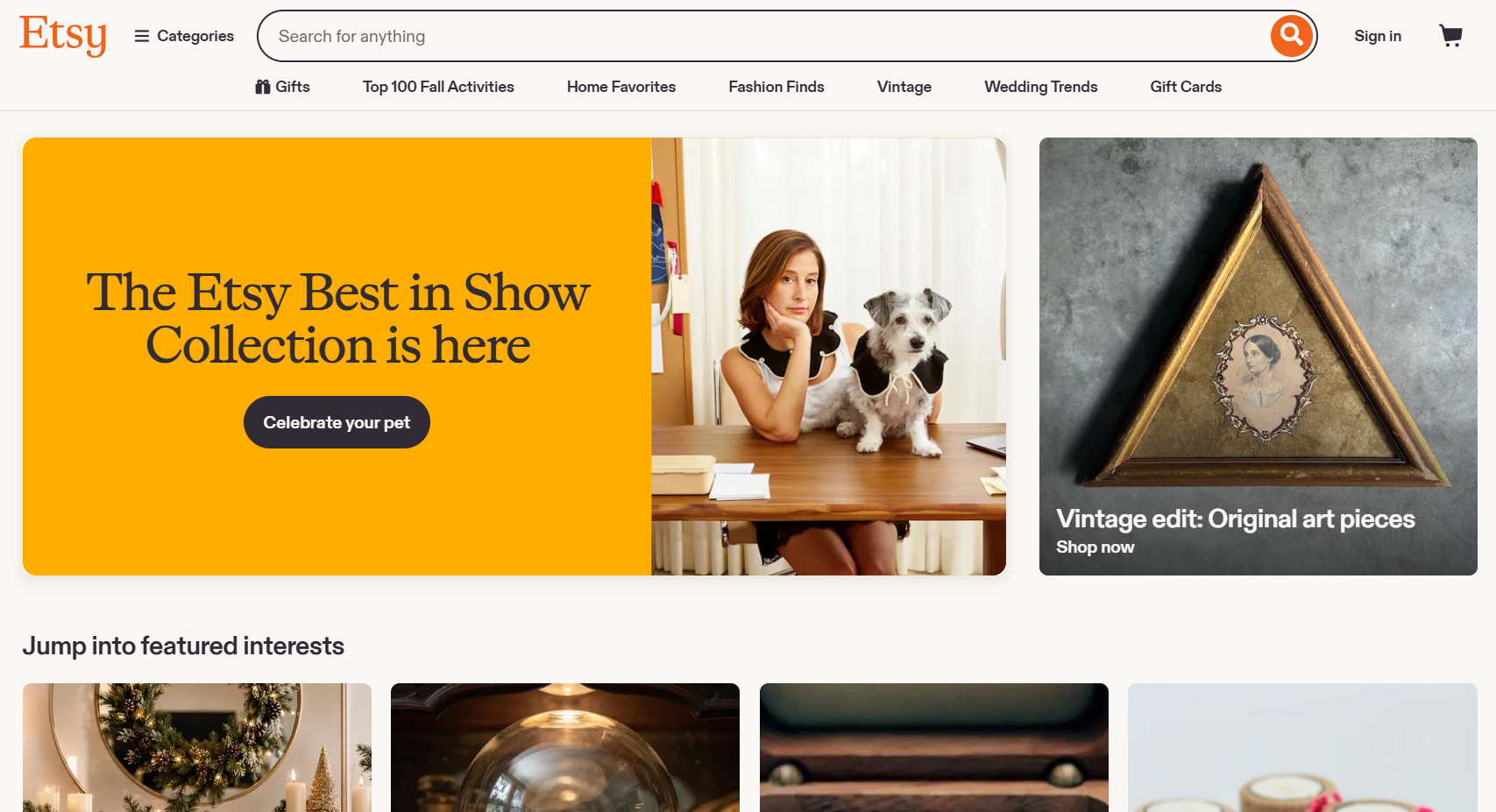
Etsy is the marketplace for handmade, vintage, and creative goods. It is the go-to ecommerce website in US for independent sellers and small makers who want to reach buyers looking for something personal.
Best for: Handmade, vintage, and custom products from independent sellers.
Drawback: Multiple fees on every sale , a listing fee, a transaction fee, and a payment-processing fee. The niche also limits what you can sell, and resellers increasingly crowd the handmade space.
7. Best Buy

Best Buy is the US leader for consumer electronics online, with a strong price-matching policy and fast same-day pickup from its stores. It is a top ecommerce website in US for appliances, laptops, TVs, and gaming.
Best for: Electronics, appliances, and tech support.
Drawback: Electronics carry thin margins and high return rates, and the third-party marketplace is far smaller and more limited than Amazon's or Walmart's.
8. Home Depot
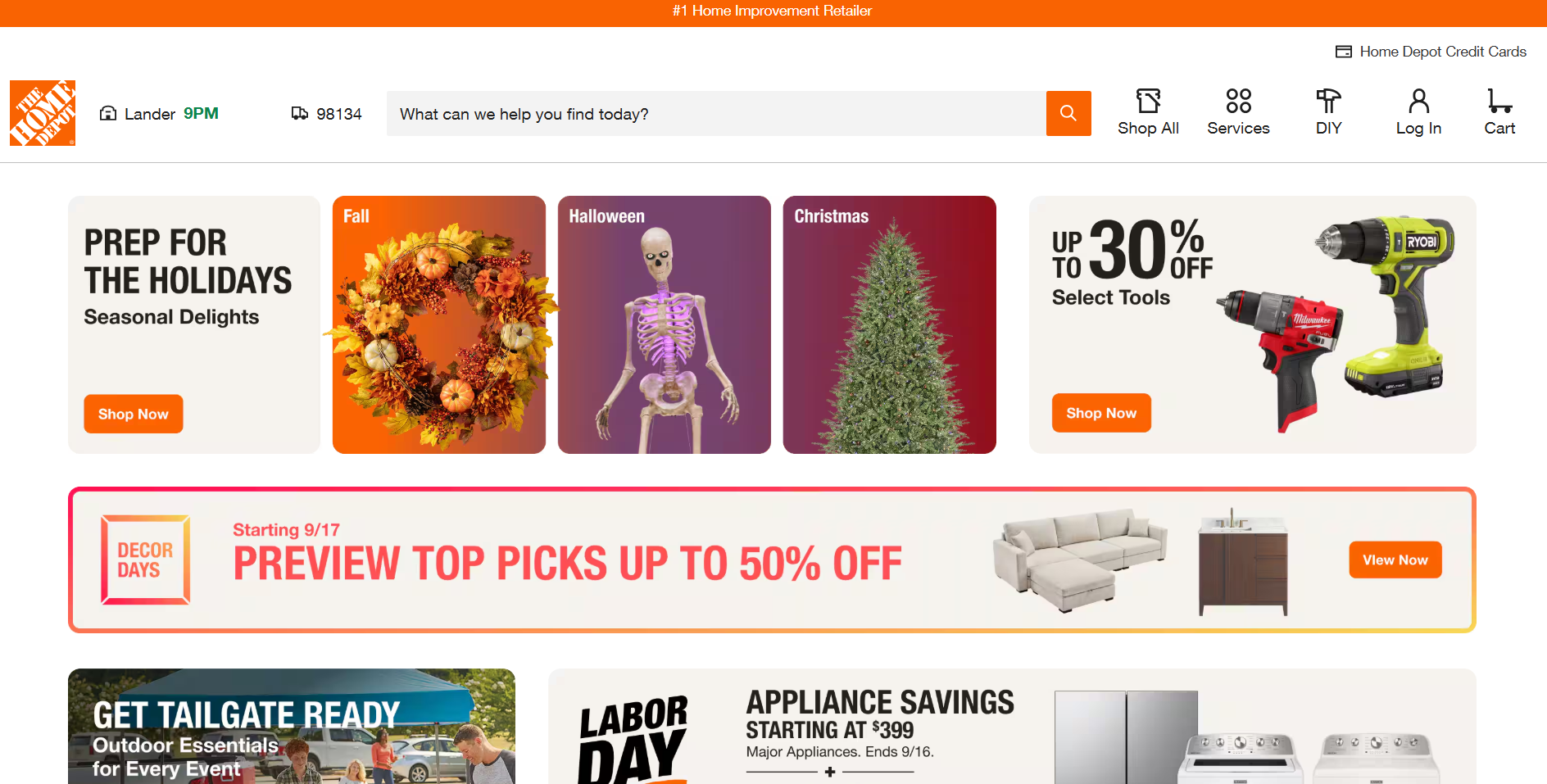
Home Depot dominates online home improvement, with tools, building materials, and appliances available for delivery or same-day store pickup. Its site is among the biggest ecommerce websites in US for DIY projects and professional contractors.
Best for: Tools, building materials, and home improvement.
Drawback: The marketplace favors established brands and professional contractors, and heavy, bulky products make shipping logistics costly and complex.
9. Costco
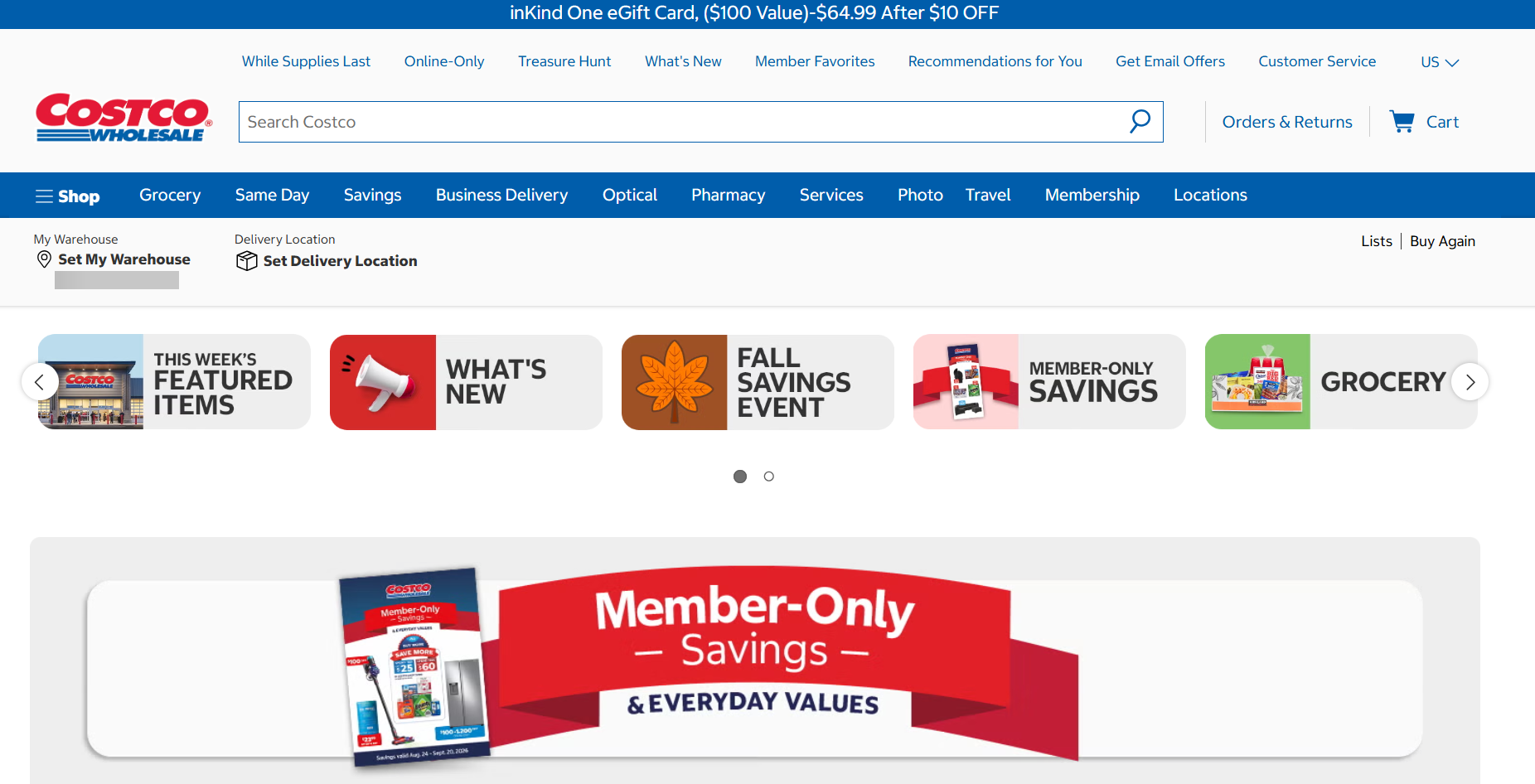
Costco runs a membership model that drives repeat online purchases of groceries, electronics, and bulk household goods. It is one of the most popular ecommerce websites in US for value-focused shoppers.
Best for: Bulk groceries and high-value electronics.
Drawback: Shoppers must pay for a membership before buying, and the online selection is smaller than general marketplaces. Bulk sizes simply do not suit every household.
10. Wayfair
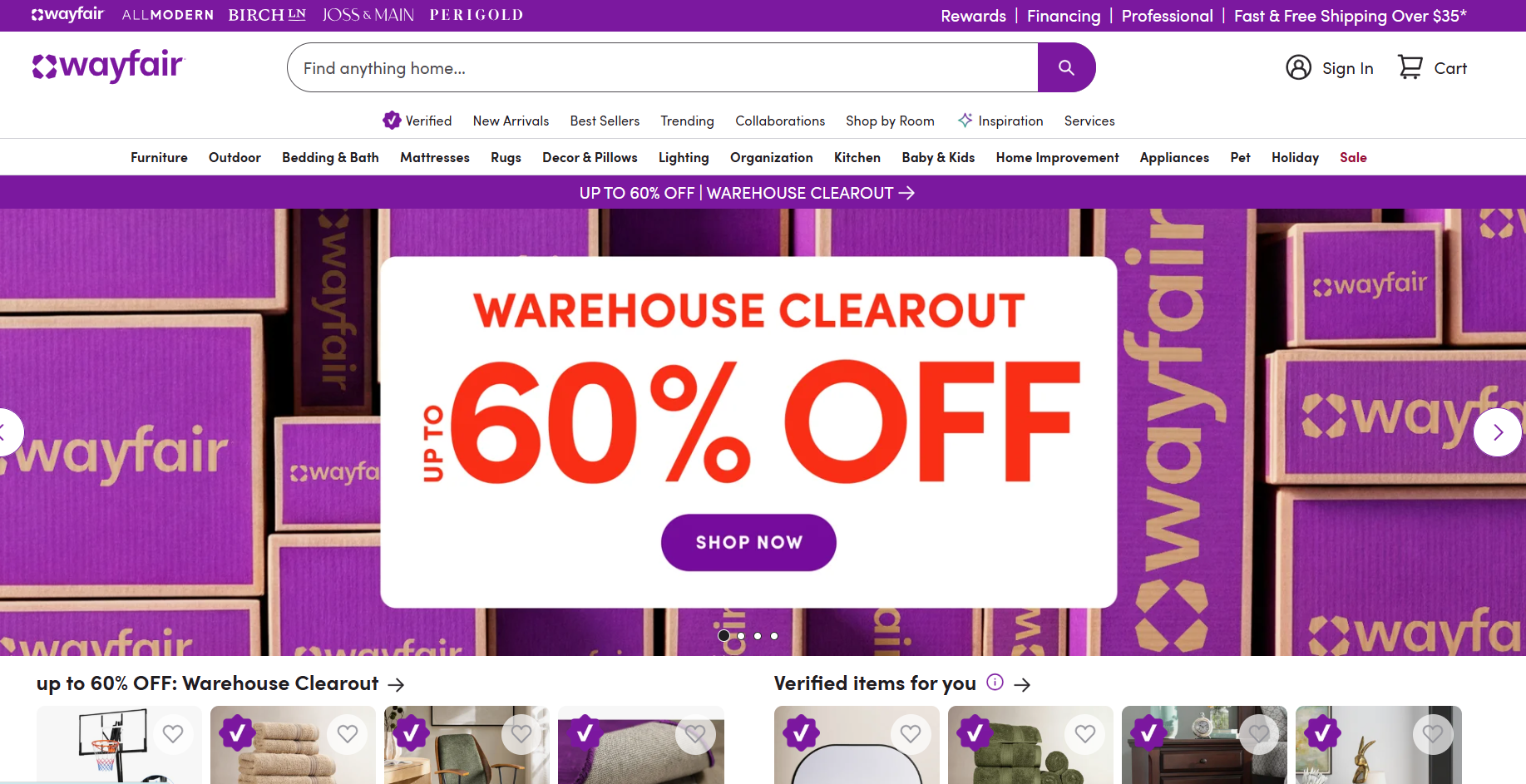
Wayfair is the leading US ecommerce website for furniture and home goods. Its large catalog and drop-shipping-style fulfillment make it a reference point for category-focused online retail.
Best for: Furniture, decor, and home furnishings.
Drawback: It is limited to furniture and home categories, and returns on large items are expensive for both buyers and suppliers. Drop-shipping also means supplier performance can vary.
Comparison Table: Popular Ecommerce Websites
What the Leaders Have in Common
Step back and the top ecommerce websites in US share a few traits. They invest heavily in fast delivery and easy returns. They make checkout as friction-free as possible. They use data and AI to personalize what you see. And they build trust through reliable order updates and clear policies.
The lesson for a smaller seller is simple: you do not need Amazon's warehouse network to win. You need the same basics: a fast, clear store, honest shipping, and a smooth checkout, at a cost you can afford.
One more thing separates the winners: several are marketplaces that host other sellers, while a few, like Apple, sell only their own products. If you are a seller, you have the same choice. You can rent space on a marketplace and pay fees for the traffic, or you can build your own branded store and own the customer relationship. For most small businesses, the smart play is a bit of both.
How Small Businesses Can Compete with StoreLink
Here is the problem with the big marketplaces. Selling on Amazon, eBay, or Etsy means paying a commission on nearly every sale, often 2–5%, and competing with thousands of nearly identical listings. Your customers belong to the platform, not to you.
StoreLink takes a different approach. Trusted by more than 10,000 stores worldwide, it is a free ecommerce website builder that turns a Google Sheet into a working online store in minutes. You add one product per row, and your storefront updates automatically whenever you edit the sheet. No coding, no templates to fight with, and no per-sale commission; StoreLink charges 0% on every plan.
Because StoreLink is built on Google Sheets, it is also the easiest online store builder to keep in sync. Update a price or stock level in the sheet and the change appears on your site immediately. Tell the built-in AI what you sell and it can generate your store in seconds. You can accept payments through PayPal, Stripe, or Razorpay, manage orders, add discount coupons, and connect a custom domain.
Pricing stays simple: the free plan covers up to 50 orders a month, and paid plans start at $10 a month with unlimited products and 0% commission at every tier. You can explore a demo store or browse live examples before you commit. If you already sell through chat, you can even build a WhatsApp store the same way.
In other words, the top ecommerce websites in US show where the market is going. StoreLink lets you build your own piece of it, without the fees, the coding, or the complexity.
Final Thoughts
The top ecommerce websites in US keep raising the bar for speed, convenience, and trust. But the rise of these giants has also created room for the opposite approach: small, independent stores that are fast to launch, cheap to run, and completely your own. StoreLink makes that possible by turning the one tool almost every business already knows, Google Sheets, into a free, no-code, 0%-commission online store.
FAQ
Which e-commerce is best in the USA?
Amazon is the best all-round ecommerce website in the US because it offers the widest selection and the fastest delivery. But "best" depends on what you are buying: Walmart wins on groceries and value, Etsy wins on handmade goods, and Best Buy wins on electronics. If you are asking as a seller, the best choice is often your own store through a 0%-commission online store builder like StoreLink, where you keep more of every sale.
What are the most popular ecommerce websites in the US?
The most popular ecommerce websites in the US are Amazon, Walmart, eBay, Apple, Target, Etsy, Best Buy, Home Depot, Costco, and Wayfair. Amazon leads by a wide margin, followed by Walmart and eBay.
Which U.S. ecommerce websites offer the fastest shipping?
Amazon and Walmart offer the fastest shipping, with same-day or next-day delivery in many areas. Target, Best Buy, and Home Depot offer fast same-day pickup and delivery by using their store networks. For independent sellers, speed is easier to promise when you control your own store and set your own shipping rules through a builder like StoreLink.
What is the best online marketplace for small businesses in the USA?
Etsy is the best marketplace for handmade and creative small businesses, while eBay suits resellers and Amazon suits sellers who want the biggest audience. Each of these charges selling fees, though. For a small business that wants full control and no commission, building your own store with StoreLink, free and Google Sheets-based, is often the stronger long-term move.
How much does it cost to build an ecommerce website in the US?
The cost depends on the platform. Marketplaces like Amazon and Etsy charge listing and selling fees on top of monthly plans, and most hosted builders charge a monthly subscription plus a transaction fee on every sale. StoreLink is the exception: it starts completely free, with a free plan covering up to 50 orders a month and paid plans from $10 a month, all with 0% commission and unlimited products.