


The global B2B ecommerce market is projected to reach $36 trillion in 2026, growing at a 14.5% compound annual growth rate according to the International Trade Administration. Wholesale trade is a major driver of that number, and distributors, manufacturers, and regional suppliers moving online are finding it easier to reach more buyers, handle larger order volumes, and cut the back-and-forth that traditional wholesale depends on.
With the help of an ecommerce website builder or online store builder, wholesale businesses can create professional online storefronts, manage bulk orders, and streamline customer transactions without extensive technical expertise.
This guide covers what wholesale ecommerce is, how it works, the types of wholesalers involved, the benefits and challenges, trends shaping 2026, and how to choose a platform that fits your business.
Table of Contents
- What Is Wholesale Ecommerce?
- How Wholesale Ecommerce Works
- Wholesale Ecommerce vs. Retail Ecommerce
- Types of Wholesalers
- Benefits of Wholesale Ecommerce
- Common Challenges in Wholesale Ecommerce
- Wholesale Ecommerce Trends in 2026
- How to Choose a Wholesale Ecommerce Platform
- FAQ
What Is Wholesale Ecommerce?
Wholesale ecommerce is the buying and selling of goods in bulk between businesses through an online platform. Instead of negotiating over the phone or at trade shows, buyers browse a digital catalog and place orders directly. The seller, a manufacturer, distributor, or supplier, manages products, pricing, and inventory online rather than through manual processes.
The defining distinction is who the customer is. In wholesale, you are always selling to another business: a retailer, a restaurant chain, a regional distributor. Orders are larger, prices are volume-based, and the buyer relationship tends to be ongoing rather than one-off.
Common examples include:
- A food distributor managing orders from hotel chains and supermarkets through an online catalog
- A garment manufacturer selling seasonal stock to boutique retailers via a digital storefront
- An electronics importer taking bulk orders from local resellers without a sales rep involved
- A beauty supplier allowing salons and spas to reorder stock on demand
If you are thinking about actually building one of these, the Store.link guide on how to start an online wholesale store covers the planning, pricing, and setup steps in practical detail.
What Is the Meaning of Wholesaler in Commerce?
A wholesaler buys products in bulk from manufacturers and sells them in smaller quantities to retailers, businesses, or other organizations. By purchasing large volumes, wholesalers help reduce costs, simplify distribution, and connect suppliers with more markets.
Wholesalers act as a link between manufacturers and retailers. Their main functions include:
- Bulk purchasing
- Product storage
- Inventory distribution
- Logistics management
- Market expansion
By handling warehousing and distribution, wholesalers help products reach more regions efficiently while allowing manufacturers to focus on production.
How Wholesale Ecommerce Works
A wholesale ecommerce platform is a digital version of a traditional order management system with most of the friction removed. Here is what a typical setup includes:
Product catalog: Buyers browse products with specs, quantities, and pricing in one place. Catalogs can be public or login-gated depending on how the seller manages buyer access.
Bulk and tiered pricing: Prices adjust automatically based on order volume or buyer type. A retailer buying 50 units sees a different price than one buying 500. These rules are configured once by the seller and applied consistently.
Online ordering: Buyers place orders directly without calling or emailing. Orders go to the seller's dashboard for fulfillment, tracking, or modification.
Inventory management: Stock levels update in real time as orders come in, which reduces overselling and fulfillment errors.
Buyer accounts: Returning customers log in, view order history, and reorder without starting from scratch, which is especially useful for businesses that restock on a regular cycle.
The result is that both sides spend less time on communication and more time on the actual business.
Wholesale Ecommerce vs. Retail Ecommerce
Both models use online storefronts, but the similarities largely end there.
Understanding these differences matters when choosing a platform. A tool designed for retail will not account for tiered pricing, buyer accounts, or the catalog management that wholesale requires.
Types of Wholesalers
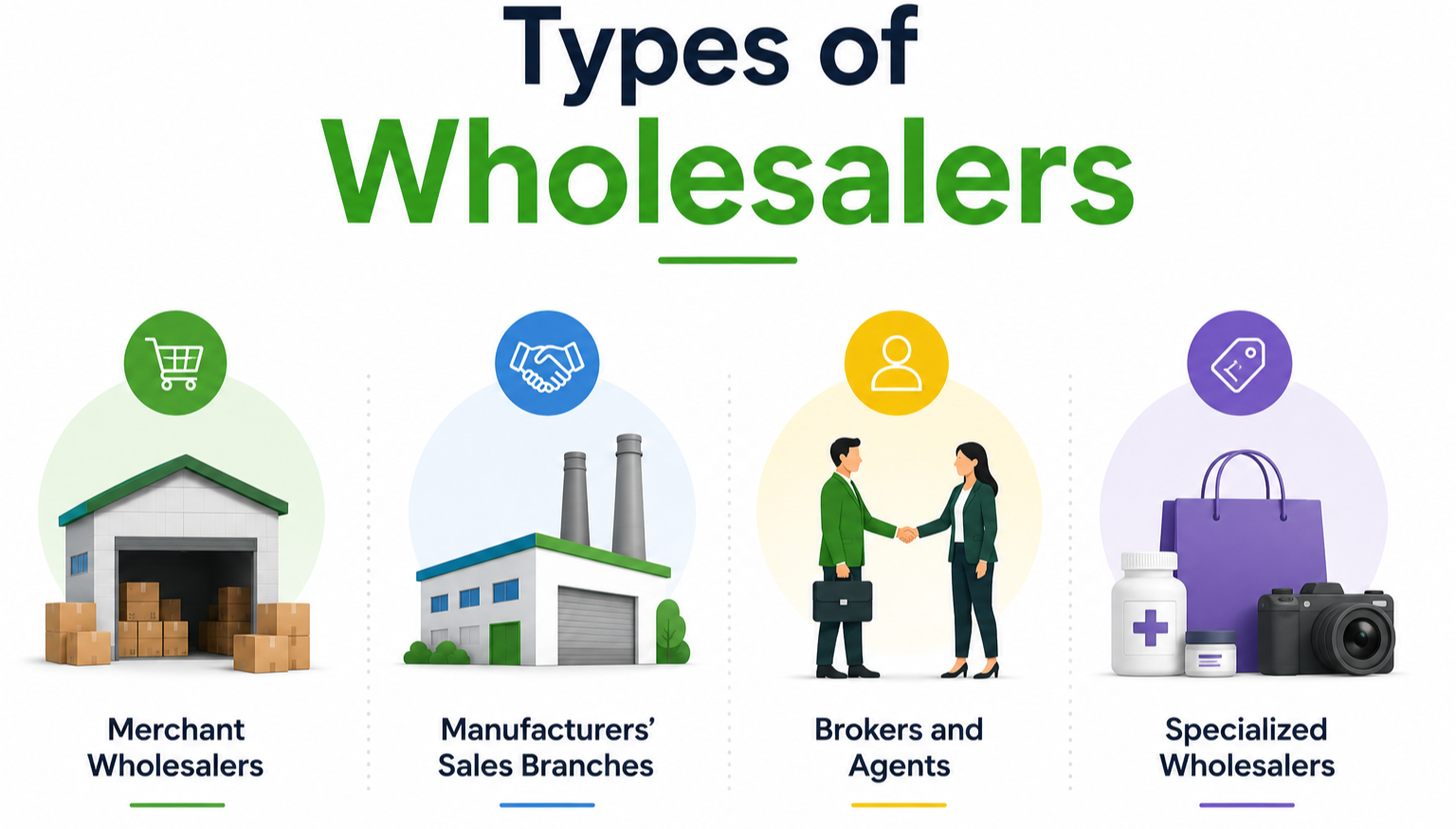
Wholesale is not one model. Different types of wholesalers serve different parts of the supply chain.
Merchant Wholesalers
The most common type. Merchant wholesalers purchase goods outright from manufacturers, store them, and sell them to retailers or other businesses. They take on inventory risk but control pricing and distribution. Examples include grocery distributors, electronics wholesalers, and fashion distributors supplying clothing stores.
Manufacturers' Sales Branches
Some manufacturers bypass traditional distributors and sell directly to retailers through their own wholesale division. This gives the manufacturer more control over pricing, brand presentation, and customer relationships. Common in pharmaceuticals, automotive parts, and industrial equipment.
Brokers and Agents
Brokers do not hold inventory. They facilitate transactions between buyers and sellers in exchange for a commission, relying on relationships and market knowledge rather than logistics. Common in commodity markets such as food, agriculture, and raw materials.
Specialized Wholesalers
These suppliers operate within a specific vertical such as medical supplies, construction materials, food service, or cosmetics. Specialization usually means deeper product knowledge and tighter service relationships with buyers in that industry.
Benefits of Wholesale Ecommerce
Wider Reach Without Additional Overhead
A physical sales team has geographic limits. An online wholesale catalog does not. Suppliers can reach buyers in new regions without opening new offices, hiring more reps, or attending trade shows.
Reduced Cost Per Order
Manual order processing (phone calls, paper forms, email chains) adds cost to every transaction. Digital ordering removes most of that overhead. Once a buyer is set up, reorders happen with minimal involvement from the seller's side.
24/7 Order Availability
Business buyers do not always order during business hours. An online wholesale platform accepts orders at any time, which means a retailer in a different time zone can restock overnight without waiting for a sales rep to be available.
Better Inventory Visibility
Real-time inventory tracking means both seller and buyer know what is available. This reduces overselling, improves fulfillment accuracy, and makes demand forecasting more reliable over time.
Stronger Buyer Experience
Today's B2B buyers expect the same convenience they get from consumer shopping experiences. According to McKinsey, over 70% of B2B decision-makers prefer digital self-service and remote interaction over traditional in-person or phone-based buying. Giving buyers an account where they can order, track, and reorder on their own schedule is no longer a differentiator. It is a baseline expectation.
More Sales Opportunities
A digital catalog is always working. Even when your team is offline, buyers can browse and place orders. This passive order generation is one of the clearest practical advantages wholesale ecommerce has over traditional selling methods.
Common Challenges in Wholesale Ecommerce
Moving from traditional wholesale to digital is not always straightforward. These are the most common obstacles businesses run into.
Digitizing Existing Catalogs
Many wholesalers have product data spread across spreadsheets, PDFs, or legacy systems. Getting that information into a clean, structured digital format is often the first and most time-consuming step.
Managing Complex Pricing Structures
Wholesale pricing is rarely simple. Different buyers get different rates. Volume discounts apply at different thresholds. Some customers have negotiated terms. Setting all of this up in a digital system and keeping it accurate requires the right platform and a clear internal process.
Integrating with Existing Systems
Most wholesale businesses already use accounting software, inventory tools, or ERP systems. A new ecommerce platform needs to connect with those tools. Disconnected systems create data silos and manual reconciliation work.
Training Buyers and Internal Teams
Even when a platform works well, getting buyers to adopt it takes effort. Long-term customers used to calling in orders may resist changing how they work. Internal teams accustomed to manual workflows face the same challenge.
Maintaining Data Accuracy
Product information, stock levels, and pricing need to stay accurate across every channel. When updates happen in one place but not another, buyers encounter incorrect information, which erodes trust and leads to order errors.
Managing Longer Sales Cycles
Unlike retail, wholesale purchases often involve multiple decision-makers and formal approval steps. Managing these longer cycles digitally, without losing the personal relationship that B2B buying depends on, is a balance many businesses find difficult to get right.
Wholesale Ecommerce Trends in 2026
Self-Service Buying Is Becoming Standard
Business buyers increasingly prefer to handle purchasing on their own. Gartner reports that 61% of B2B buyers now prefer a buying experience with no sales rep involved. Platforms that give buyers clean self-service tools (account portals, easy reordering, order tracking) are winning on retention.
Mobile Is a Serious B2B Channel
Mobile commerce now accounts for nearly 60% of total global ecommerce sales, and B2B buyers are part of that shift. Purchasing managers and procurement teams are browsing catalogs and placing orders from their phones. A wholesale platform that performs poorly on mobile is losing orders.
AI Is Changing Demand Planning
Wholesalers are beginning to use AI for demand forecasting, personalized product recommendations, and pricing optimization. Early adopters are seeing better inventory planning and more relevant buyer experiences as a result.
Digital Payments Are Replacing Traditional Invoicing
More businesses are shifting away from net payment terms and traditional invoicing toward digital payment methods. Accepting credit cards and digital payments directly through a wholesale storefront reduces friction and speeds up cash collection.
Data-Driven Decision Making Is Gaining Ground
Wholesale businesses that track buyer behavior, including what is being viewed, added to cart, or abandoned, make better decisions about pricing, stock levels, and catalog structure. Data that was previously invisible in phone-based sales is now measurable.
How to Choose a Wholesale Ecommerce Platform
There is no single best wholesale ecommerce platform. The right choice depends on the size of your catalog, the complexity of your pricing, how technical your team is, and your budget. Here are the most important factors to evaluate.
Catalog management: Can you easily add, edit, and organize products in bulk? For businesses with large or frequently changing catalogs, this matters a great deal. Look for platforms that make bulk updates straightforward rather than requiring one-at-a-time edits.
Pricing flexibility: Does the platform support tiered pricing, volume discounts, and different rates for different buyer groups? If your pricing structure is complex, you need a platform that can reflect it accurately without manual workarounds.
Buyer account management: Can buyers create accounts, view order history, and reorder independently? Strong account tools reduce your admin workload and improve the buyer experience simultaneously.
Integration capabilities: Does the platform connect to the tools you already use, such as accounting software, inventory systems, and shipping tools? If integrations require custom development, factor that cost and effort into the decision.
Setup time and technical requirements: How quickly can you go from zero to a live catalog? For smaller or newer wholesale businesses, a platform that requires months of implementation and a developer team may not be the right fit.
Cost structure: Monthly fees, transaction fees, and any costs tied to scale should all be clear before you commit. Hidden costs that appear as you grow can make a platform significantly more expensive than it initially appeared.
Also read:How to Create an Online Store: Step-by-Step Guide for Beginners
Why Wholesalers Choose Store.link
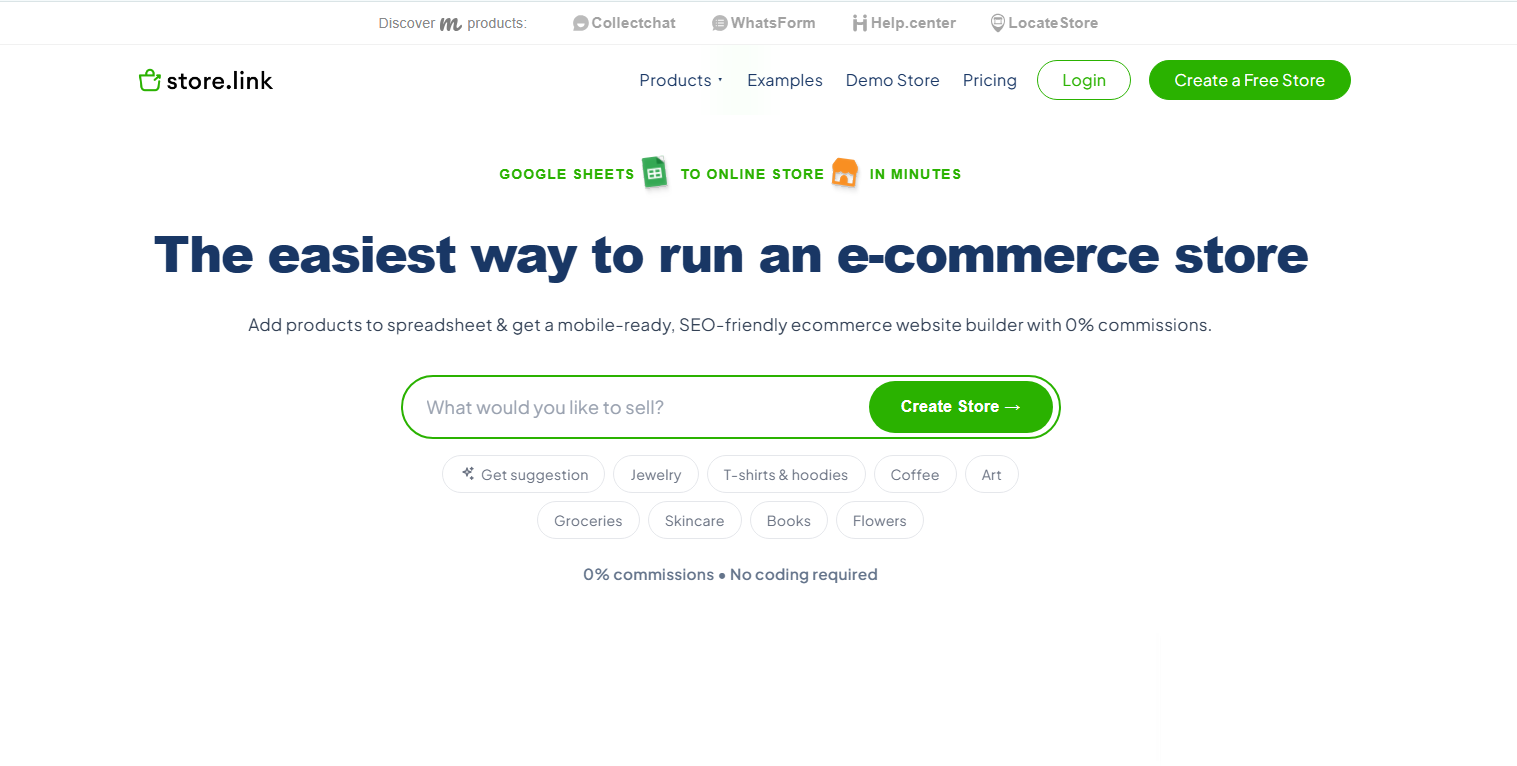
Store.link makes it easy for wholesalers to launch and manage an online catalog without the complexity of traditional ecommerce platforms. Built on Google Sheets, it allows businesses to update products, pricing, and inventory in real time using a familiar tool.
Key benefits include:
- Google Sheets-based product and inventory management
- Fast setup with no technical expertise required
- Support for Stripe, PayPal, Square, Razorpay, and custom payment links
- No sales commissions on any plan
- Free plan available to get started
Store.link is a practical choice for distributors, manufacturers, regional wholesalers, startup suppliers, and B2B sellers looking for a simple and affordable wholesale ecommerce solution.
Conclusion
Wholesale ecommerce allows businesses to sell products in bulk through an online platform instead of relying on phone calls, emails, or manual order processes. It helps wholesalers manage products, pricing, inventory, and customer orders more efficiently while providing buyers with a faster and more convenient purchasing experience.
As more businesses move online, wholesale ecommerce has become an important part of B2B growth. It helps companies reach more customers, reduce operational costs, improve order accuracy, and increase sales opportunities. Businesses that adopt digital wholesale solutions are better prepared to meet changing buyer expectations and stay competitive in the market.
FAQs
What is the meaning of wholesaler in commerce?
Bulk buying from makers is how one type of seller operates. Instead of dealing with individual shoppers, these sellers pass goods to stores or other companies. Their spot in the flow from factory to customer makes movement smoother. Handling large volumes helps keep shelves stocked down the line.
Which platform is best for wholesale business?
One size doesn’t fit all when picking a wholesale ecommerce setup. Built inside Google Sheets, Store.link keeps things straightforward and light on budget. Big companies might look elsewhere platforms made just for complex B2B work. What works hinges on what your business actually does.
What are the common challenges in moving from traditional to online wholesale?
Common challenges include digitizing product catalogs, training employees, managing online pricing, integrating inventory systems, and adapting to new buying behaviors. However, modern wholesale ecommerce platforms make the transition easier and more efficient than ever.
What is retail vs. wholesale?
Bulk sales to companies define wholesale, whereas retail means handing goods straight to buyers. Usually the amounts ordered in wholesale run high, with prices shaped by how much is bought. Sometimes it's about moving big quantities at once, other times it's steady supply runs tied to scale.