


These days, setting up a shop on the internet takes far less effort because of new tools like online store builders made for selling. Though plenty still go with Wix, others now look elsewhere, ecommerce website builders that give more room to adapt, cost less, handle transactions better, or simplify daily tasks. Getting it wrong in a web-based marketplace can tip the balance between consumer feeling, sales and brand equity. As digital traffic from everywhere grows, the selected line quietly affects the finish, normally not read until well into the journey.
By 2028, global outlay on internet retail may attain eight trillion dollars, reports Statista. With so many choices around, firms take time examining solutions prior to deciding what to adopt. Jumping into 2026, this look digs into solid stand-ins for Wix, each suited to different needs.
Table of Contents
- Wix Pros and Cons
- Why Businesses Look for Wix Alternatives
- 10 Best Wix Alternatives for eCommerce in 2026
- How to Choose the Right Platform for Your Business
- Free Wix Alternatives Worth Considering
- Why Store.link Is Gaining Popularity
- Conclusion
- FAQs
Wix Pros and Cons
Understanding Wix advantages and Disadvantages helps determine whether an alternative may better suit your needs.
Pros
- Easy drag-and-drop builder
- Large template library
- Beginner-friendly interface
- Integrated hosting
- Mobile-responsive designs
Cons
- Limited flexibility for advanced ecommerce
- Can become expensive as businesses grow
- Limited control compared to open-source platforms
- Migration challenges
- Some advanced features require paid plans
These limitations encourage many businesses to explore alternative ecommerce solutions.
Why Businesses Look for Wix Alternatives
Business requirements evolve over time.
Common reasons companies seek alternatives include:
- Lower operating costs
- Better ecommerce capabilities
- Greater customization
- Improved scalability
- Better SEO tools
- Simpler product management
What works best comes down to how big your operation is, what you aim to achieve, one thing at a time. Tech needs to shape it, quietly steering the choice without fanfare.
10 Best Wix Alternatives for eCommerce in 2026
1. Store.link
Best for Simplicity and Cost Efficiency
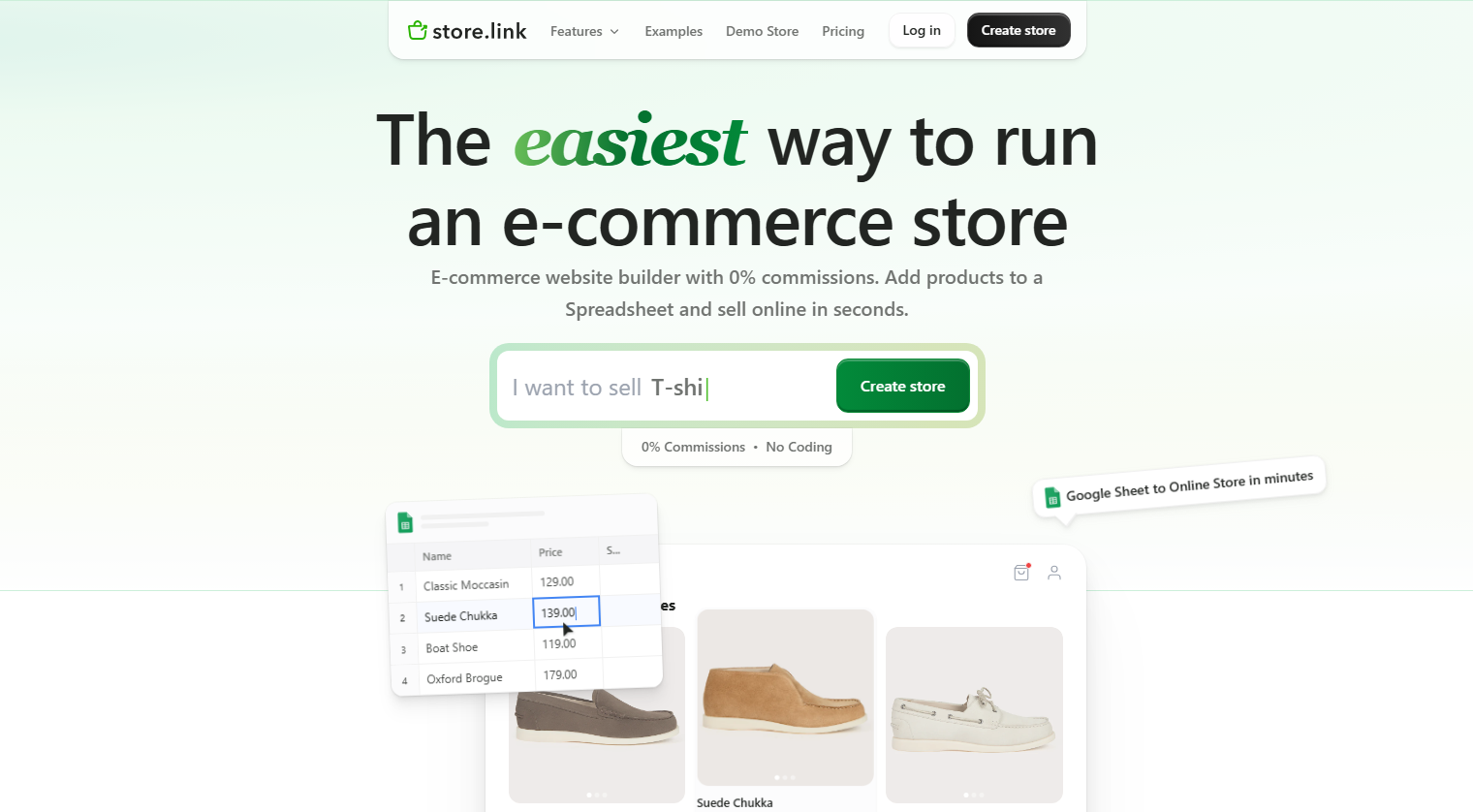
Store.link is becoming one of the most practical ecommerce solutions for entrepreneurs, creators, and small businesses.
What makes it special is that it runs on Google Sheets, plus access costs nothing.
Key aspects are:
- No coding required
- Fast setup
- Google Sheets integration
- Mobile-friendly design
- Easy inventory management
- Product updates through spreadsheets
Managing products becomes simpler when using Google Sheets instead of wrestling with a tangled dashboard interface. Direct control lives inside familiar rows and cells now.
For small shops just starting online sales, Store.link stands out as a solid fit. What pulls them in is how it simplifies setup without high costs up front.
2. Shopify

Best for Scaling Ecommerce Businesses
Still holding strong, Shopify sits among the top global players in online selling.
Key features are:
- Extensive app marketplace
- Secure checkout
- Multi-channel selling
- Inventory management
- Marketing integrations
Shopify is ideal for growing businesses but may involve higher monthly costs.
3. WooCommerce
Best for WordPress Users
Converting online presences into selling-enabled storefronts for that WooCommerce is a popular WordPress plugin
Advantages:
- Strong SEO capabilities
- Extensive customization
- Large plugin ecosystem
- Open-source flexibility
It works best for users comfortable with WordPress management.
4. BigCommerce
Best for Large Online Stores
BigCommerce supplies high-volume online store features.
Key aspects are:
- Advanced inventory tools
- Multi-store management
- Strong scalability
- Built-in ecommerce functionality
It is suitable for medium to large businesses.
5. Squarespace Commerce

Best for Design-Focused Brands
Squarespace integrates attractive website visuals with retail platform power.
Popular among:
- Creative professionals
- Fashion brands
- Designers
- Artists
Its visual presentation capabilities are among the strongest in the market.
6. Ecwid
Best for Existing Websites
Ecwid enables companies to integrate online capabilities to an existing web presence.
Features are:
- Easy integration
- Multi-platform support
- Product synchronization
- Mobile management
It is particularly advantageous for enterprises that already maintain a website.
7. Webflow Ecommerce
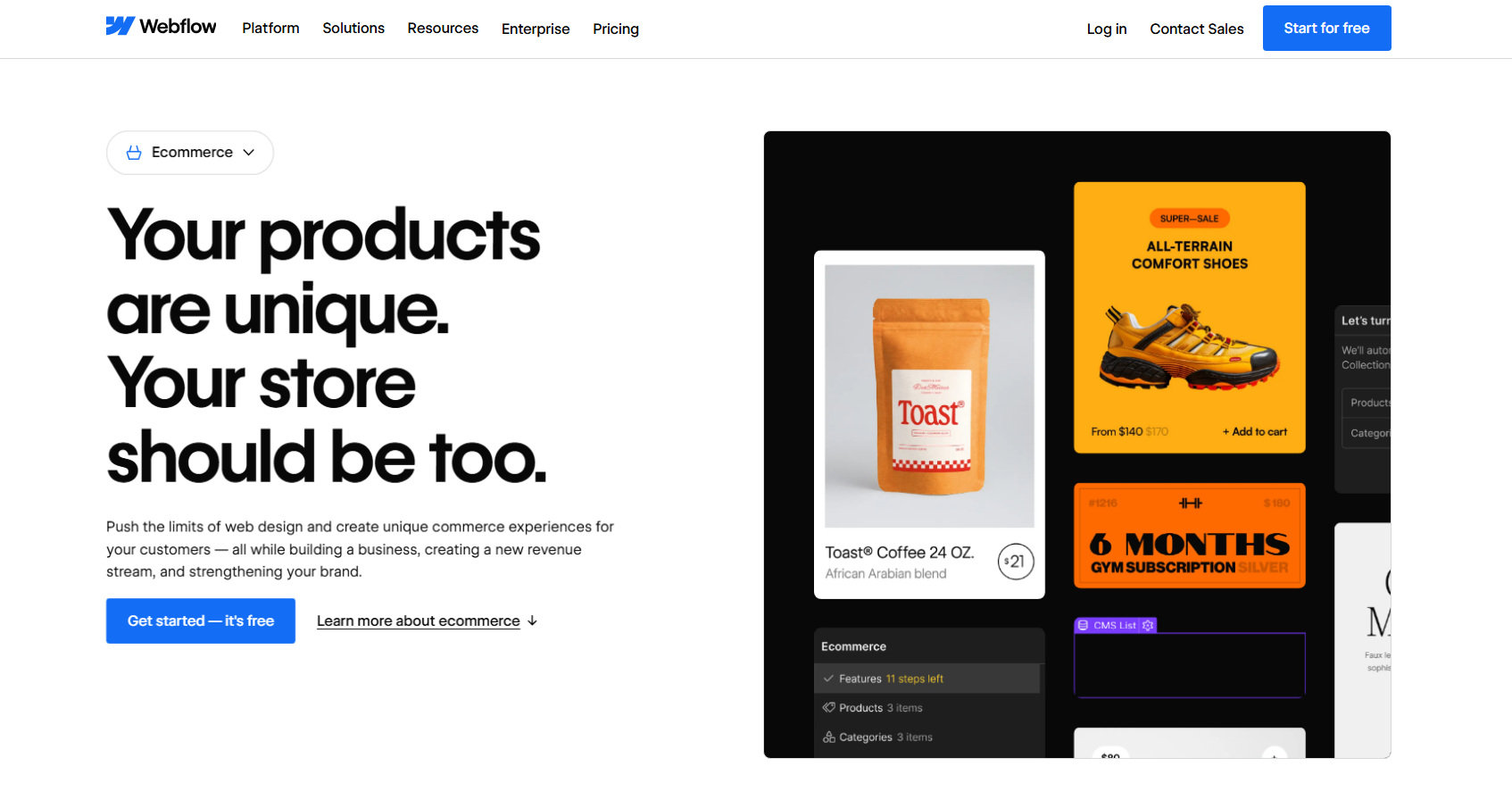
Best for Advanced Design Control
Webflow furnishes expanded stylistics compared to ordinary web builders.
Advantages:
- Visual development tools
- Advanced customization
- Responsive design capabilities
It appeals to businesses seeking unique website experiences.
8. Magento Open Source

Best for Enterprise Flexibility
Magento provides powerful ecommerce capabilities for larger organizations.
Features:
- High scalability
- Extensive customization
- Advanced inventory management
Still, knowing the tech usually matters.
9. Shift4Shop

Top for Comprehensive Ecommerce Features
Shift4Shop offers:
- Product management
- SEO tools
- Marketing integrations
- Secure checkout
One single solution draws expanding online stores in.
10. OpenCart
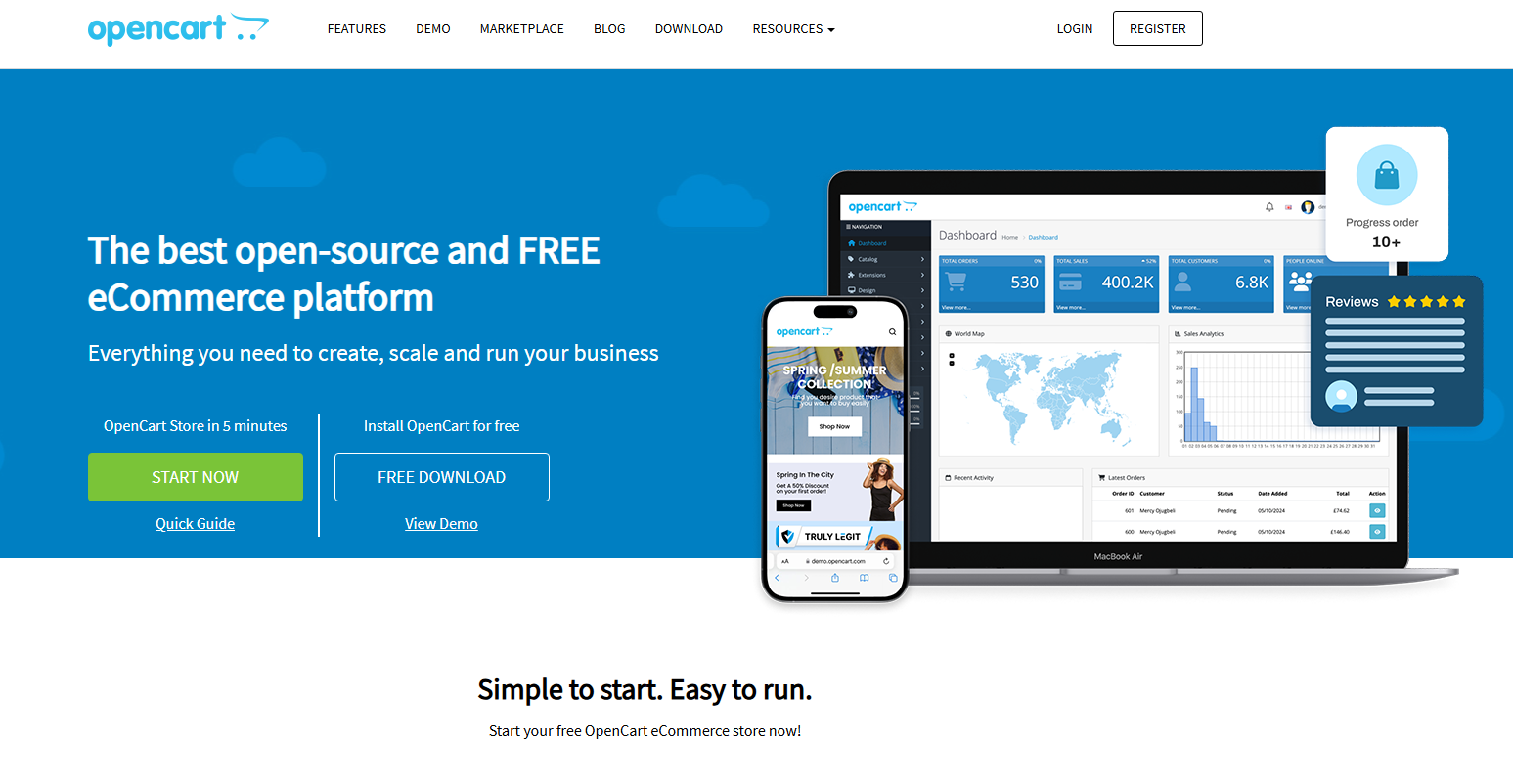
Top-rated Open-Source E-commerce Solution
OpenCart provides:
- Free software
- Multi-store support
- Large extension marketplace
- Customization flexibility
It remains a popular option for businesses seeking full control.
Ecommerce Platform Comparison
How to Choose the Right Ecommerce Platform for Your Business
Choosing the right ecommerce platform is an important step when starting or growing your online business. Every platform has different features, pricing, and tools, so it's important to choose one that fits your business needs. Here are a few things to consider before making your decision.
Budget
Start by looking at the total cost of the platform. Don't just focus on the monthly subscription. Also consider:
- Monthly or yearly plans
- Transaction fees
- Hosting costs
- Extra costs for apps or plugins
- Future upgrade costs as your business grows
Ease of Use
Choose a platform that is easy for you to manage. If you're new to ecommerce, look for a platform with a simple dashboard and easy setup. If you have technical experience, you may prefer a platform that offers more customization.
Product Catalog
Think about how many products you plan to sell. Some platforms are perfect for small stores, while others are built to handle large product catalogs and advanced inventory management.
Growth Potential
Your business may grow over time, so choose a platform that can grow with you. Features like multi-channel selling, advanced reports, and automation can become valuable as your store expands.
Mobile Experience
Many customers shop using their phones, so your online store should work well on mobile devices. A responsive design and a smooth checkout experience can help improve sales.
SEO Features
Good SEO features can help your store appear higher in search results. Look for features like customizable URLs, meta titles and descriptions, image optimization, XML sitemaps, and fast-loading pages. These can help bring more organic traffic to your website.
Free Wix Alternatives Worth Considering
If you're looking for a free alternative to Wix, there are several good options available. These platforms can help you build and manage an online store without spending a lot of money.
Some popular free Wix alternatives include:
- Store.link – A simple ecommerce platform that lets you manage products using Google Sheets.
- WooCommerce – A free WordPress plugin with powerful ecommerce and SEO features.
- OpenCart – An open-source platform with flexible customization options.
- Ecwid – Offers a free plan and can be added to an existing website.
- Magento Open Source – A powerful option for businesses that need advanced features and flexibility.
The best platform depends on your business goals and budget. If you want a simple and affordable way to start selling online, Store.link is a great choice. It is easy to set up, works with Google Sheets, and helps you manage your products without any complicated tools.
 Ziyad K
Why Store.link Is Gaining Popularity
Store.link stands out among modern ecommerce solutions for several reasons.
Built on Google Sheets
Unlike traditional ecommerce platforms, Store.link allows businesses to manage products directly through Google Sheets.
Key aspects are:
- Familiar interface
- Faster updates
- Easier inventory management
- Reduced learning curve
Freely Available
Many ecommerce platforms require monthly subscriptions.
Store.link offers an accessible solution for entrepreneurs seeking cost-effective ecommerce tools.
Fast Store Creation
Users can launch stores quickly without complex technical setup.
Perfect for Small Businesses
Store.link works particularly well for:
- Local retailers
- Home businesses
- Creators
- Freelancers
- Startup brands
These advantages make it one of the strongest best Wix alternatives available today.
Conclusion
Choosing the right ecommerce platform depends on your business needs, budget, and future plans. While Wix works well for many users, it may not offer the flexibility or features that every growing business requires.
There are many strong Wix alternatives available, each with its own advantages. Take the time to compare their features, pricing, ease of use, and scalability before making your decision.
If you're looking for a simple and affordable solution, Store.link is a great option. Its Google Sheets-based product management makes it easy to launch and manage an online store without any technical complexity.
FAQs
Is there anything better than Wix?
True. Some tools fit shops better than others do. Take Shopify, it handles online selling well. Then there's WooCommerce, flexible but needs a website first. BigCommerce supports growth without extra plugins. Store.link keeps things fast for digital goods. Each works differently under the hood.
What is the best free alternative to Wix?
Store.link runs on Google Sheets, costs nothing, works right away. Another path could be WooCommerce, many choose it. OpenCart pops up often too.
Which alternative is best for SEO?
The store shows up in search changes based on if you pick WooCommerce, Shopify, or Webflow. Success leans heavily on structure, how the site goes together, along with the method behind adjustments. Each choice shapes outcomes in its own way.
Which Wix alternative is the easiest to use?
Starting out feels less tricky with Store.link or Shopify because navigation flows naturally through each step. A beginner finds footing fast when tools behave predictably across tasks.