


Launching an online business has become more accessible than ever before with an online store builder and ecommerce website builder. But not everything is perfect, and many entrepreneurs fail to consider a number of vital issues when setting up their online shop.
The good news is that most of the common mistakes in running an ecommerce business can easily be avoided. Store.link, a no-code platform built on Google Sheets, allows you to manage your store easier and focus on what really matters, growing your business. Now that the world’s e-commerce market is set to grow to over 8,000 billion USD by 2027, it is the perfect time to jump on the bandwagon. But, as with any other business endeavor, an online store needs a keen eye on the potential dangers and pitfalls on the way ahead.
Why Do Beginners Make eCommerce Mistakes?
1. Lack of Understanding of the Target Audience

Why is it a mistake?
Trying to fit the target audience to suit everyone will only lead to a lower conversion rate, as it will become significantly more difficult to identify the niche that will benefit from the product. Failure to properly segment and analyze the audience will lead to difficulty launching a marketing campaign and developing products that the identified group of customers will actually need.
How to avoid it?
Conduct extensive market research and analyze the characteristics of your audience in detail. You can use Google Analytics to get information about your visitors’ behavior on your website. Additionally, you may want to look through online forums and reviews to get statistical data regarding the problems and requirements of your audience.It may also be helpful to outline several major buyer personas.
Having an understanding of your audience is essential in creating a winning strategy for your online store that will appeal to your target audience.
2. Choosing the Wrong eCommerce Platform
Why is it a mistake?
Signing up for a heavyweight platform with pricing and complexity built for enterprise brands. Beginners burn weeks learning software instead of selling, and platform fees eat thin margins alive before a single sale closes.
How to avoid it?
Choose the simplest tool that does the job. StoreLink, for example, lets you run a full store from a Google Sheet:
- Free-forever, with zero commission on every plan, free or paid
- No coding required
- Products managed in a spreadsheet you already know
- Live store in minutes, not weeks
Your platform is a means to an end. The less time you spend operating it, the more time you spend growing.
3. Writing Generic Product Descriptions
Why is this a mistake?
Many beginners copy descriptions from suppliers. This creates duplicate content and makes products less appealing to customers.
How can you avoid it?
Write original descriptions that answer the buyer’s real questions:
- What does it do for me? (benefit first)
- What is it made of? (materials, specs)
- How do I use it?
- Why this one over alternatives?
Unique descriptions rank better and sell better. One product, well described, beats ten products copied and pasted.
4. Ignoring Mobile Users
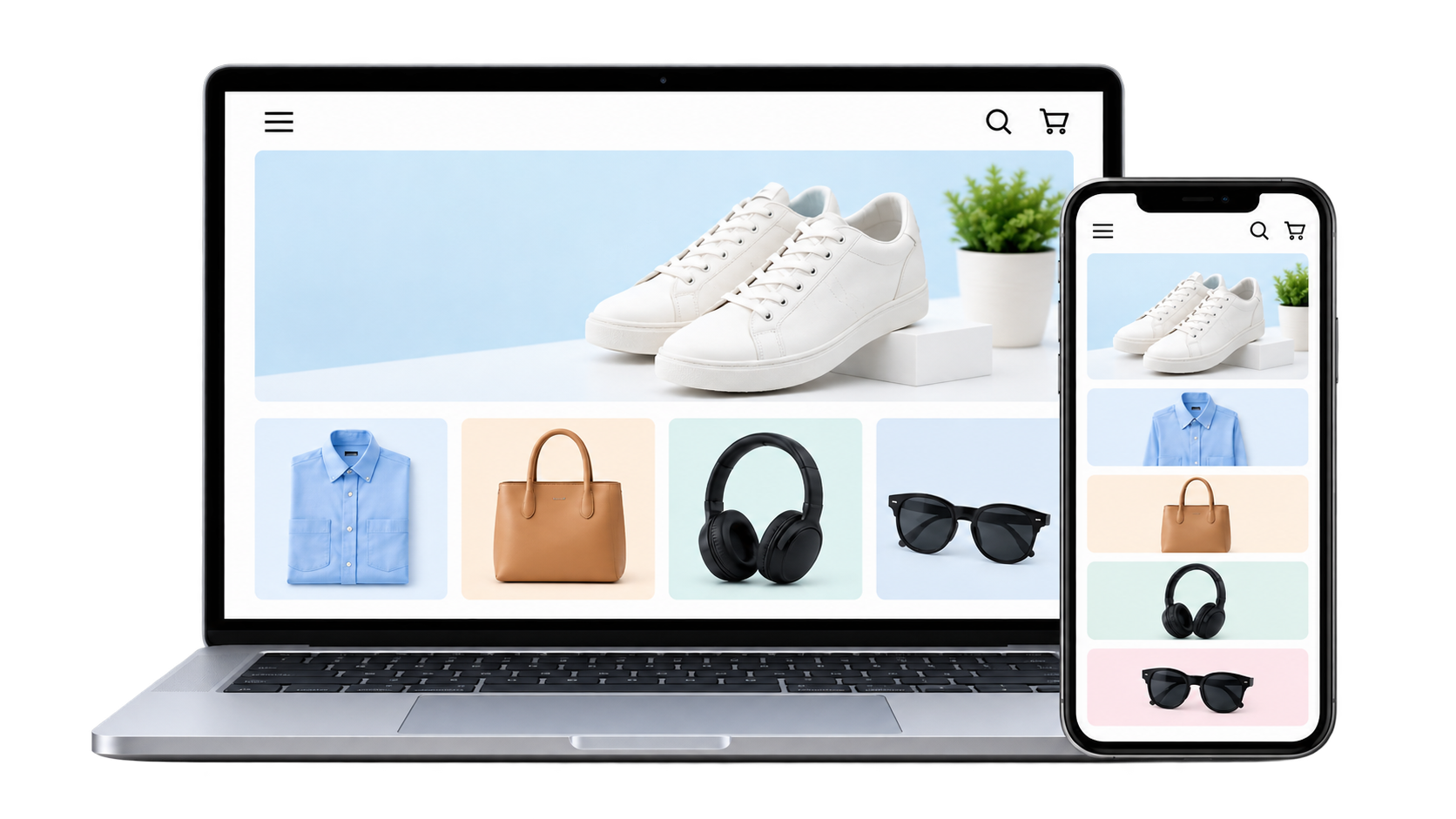
Why is this a mistake?
Designing for desktop and treating mobile as an afterthought. A large share of ecommerce traffic comes from phones. A store that’s clunky on mobile is a store with a hole in its bucket.
How can you avoid it?
- Use a responsive, mobile-first theme
- Compress images so pages load fast on slow connections
- Test your full purchase flow on an actual phone, not just a resized browser window
- Keep menus short and thumb-friendly
Fast + simple on mobile = more sales. That’s the whole formula.
5. Complicated Checkout Process
Why is this a mistake?
Every additional step during checkout will lead to cart abandonment. Customers want a convenient and fast checkout process.
How can you avoid it?
- Offer guest checkout, always
- Ask only for what you need to ship the order
- Show shipping costs (and free-shipping thresholds) early
- Display trusted payment options clearly
The best checkout is the one the customer barely notices.
6. Poor Website Navigation
Why is this a mistake?
Visitors should find products quickly. Confusing menus and poorly organized categories often cause customers to leave.
How can you avoid it?
- Organize products into a few clear, logical categories
- Add search and filters once your catalog grows
- Use descriptive category names, not clever ones
- Put your bestsellers and offers where the eye lands first
Navigation is customer service you do before anyone asks.
7. Ignoring SEO
Why is it a mistake?
No matter how great your product is, if people can’t find you, it won’t make a difference. SEO will help you reach a bigger audience and increase organic traffic to your site.
How can you avoid it?
- Write descriptive product titles people actually search for (“Handmade Rose Gold Stud Earrings” beats “Earrings #12”)
- Fill in meta descriptions
- Add alt text to every image
- Keep URLs clean and readable
- Publish helpful content (buying guides, comparisons, how-tos) that answers customer questions
SEO compounds. Every optimized page keeps working while you sleep.
8. Depending Only on Paid Advertising
Why is this a mistake?
Paid advertising can generate traffic quickly, but relying on it alone is expensive. If advertising costs increase, sales may decline.
How can you avoid it?
Combine paid marketing with:
- SEO
- Email marketing
- Social media
- Referral programs
- Content marketing
A diversified strategy creates more stable growth.
9. Not Tracking Performance
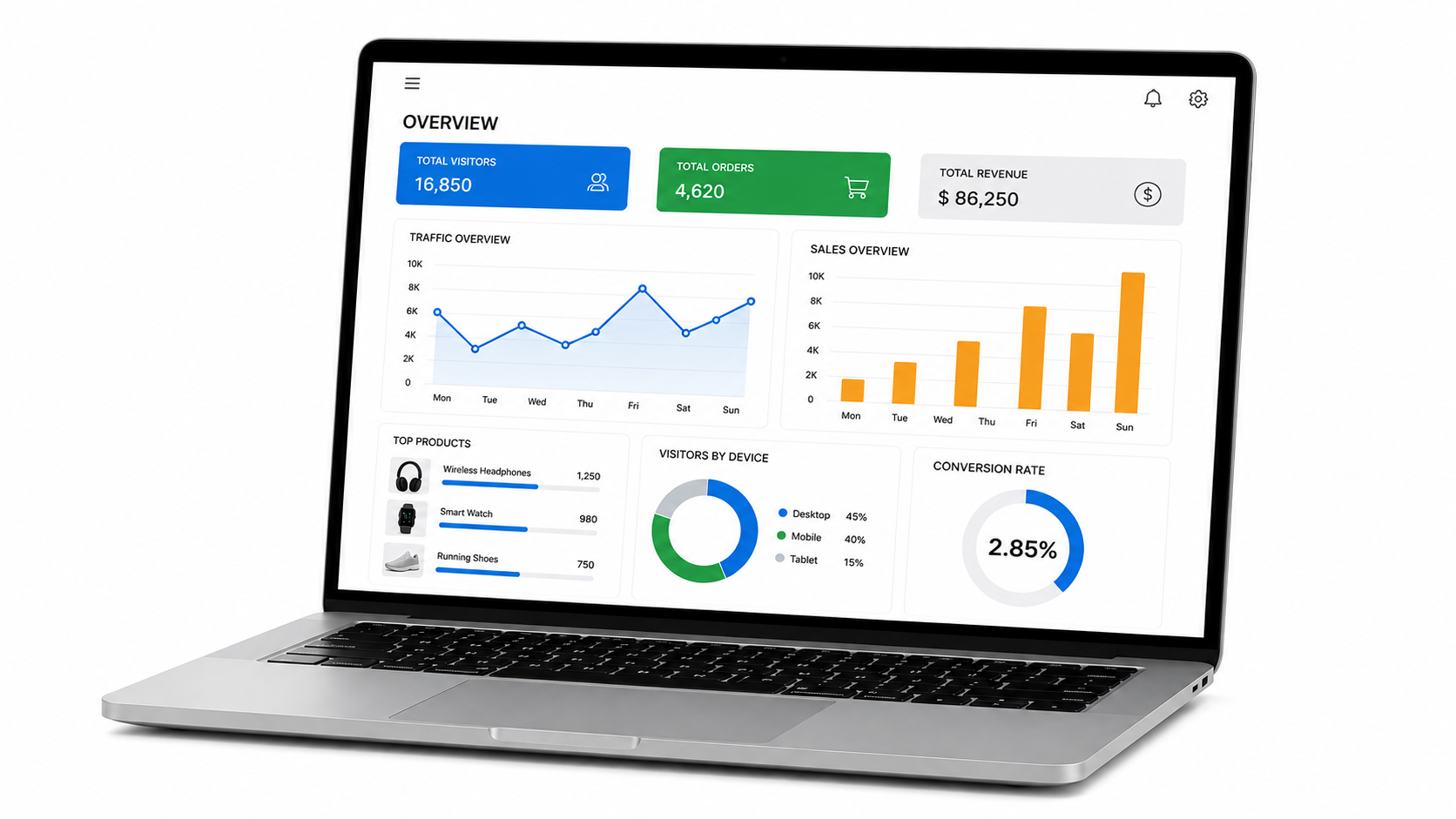
Why is this a mistake?
Without analytics, it’s impossible to know what’s working. Many beginners make decisions based on assumptions instead of data.
How can you avoid it?
Monitor:
- Website traffic
- Conversion rates
- Best-selling products
- Customer behavior
- Sales trends
Review your data regularly and make improvements based on real insights.
10. Neglecting Customer Support
Why is this a mistake?
Answering questions slowly (or never), hiding return policies, going silent after the sale. Bad support turns a solvable problem into a public bad review, and refunds follow.
How can you avoid it?
- Reply fast, on whatever channel your customers already use
- Publish clear return, refund, and shipping policies
- Send proactive order updates (confirmation, shipped, delivered)
- Ask for feedback after delivery
Great support is not a cost center. It is the cheapest retention and referral program you will ever run.
Quick Summary
Why Picking the Best eCommerce Platform Makes a Difference
When starting an ecommerce business, many individuals think the key to success is to offer high-quality products. However, this belief is wrong because it is crucial to select the appropriate platform for selling goods.
The right ecommerce platform will allow one to accomplish a variety of tasks, ranging from product management to providing a positive customer experience. In addition, it is vital to avoid complicated software that can hinder the growth of one’s business.
Store.link is an innovative tool that enables anyone to launch an online store without the need to learn how to use challenging platforms. This platform is based on Google Sheets, which makes store management intuitive and convenient. Store.link is also free, which makes it ideal for everyone who wishes to avoid spending hundreds of dollars per month on conventional website builders. Regardless of whether one wants to sell online courses, handmade jewelry, clothing, or any other products, Store.link will assist in making the process of selling easier.
Apart from the aforementioned advantages, there are additional benefits of using Store.link. For instance, one will not have to spend hours upon hours learning how to use the software since it is intuitive. Furthermore, there is no need to worry about payment processing, marketing, or fulfillment since Store.link can take care of these services.
Additional eCommerce Tips for Beginners
Even though it is vital to avoid mistakes when launching an online business, one should also remember some ecommerce tips to make the most money and build a sustainable brand in the long run. For example, one should use high-quality product photos, since online shoppers cannot physically touch.
In addition, it is necessary to take pictures from multiple angles and try to capture images demonstrating the product’s usage.
Build Customer Trust
Trust plays a major role in ecommerce success.
Display:
- Customer reviews
- Secure payment badges
- Return policies
- Shipping information
- Contact details
When customers trust your store, they’re more likely to complete their purchase.
Keep Your Store Updated
An outdated website can reduce customer confidence.
Regularly update:
- Product listings
- Pricing
- Inventory
- Promotions
- Blog content
Fresh content also supports search engine optimization (SEO).
Invest Time in Content Marketing
Creating helpful content attracts potential customers before they’re ready to buy.
Examples are:
- Buying guides
- Product comparisons
- How-to articles
- Frequently asked questions
According to research done within the business sector, companies that are able to continually produce useful content see a spike in traffic on their website much higher than those that do not.
Learn From Customer Feedback
Customer reviews tell you what you need to know about your business.
Pay attention to comments about:
- Product quality
- Delivery experience
- Website usability
- Customer service
Use this feedback to make continuous improvements.
Conclusion
Every successful store owner has made some of these mistakes. The difference is they identified them, fixed them, and kept improving. Know your customer. Keep the experience fast and simple. Track what happens. Support people well. Choose a platform that stays out of your way.
StoreLink makes that last part easy: a full online store powered by Google Sheets, free-forever with zero commission on every plan, and no code required. Launch in minutes, update as easily as editing a spreadsheet, and spend your time on the thing that actually grows the business: your customers.
FAQs
What is the biggest mistake beginners make in ecommerce?
Starting without understanding their customers and market. Audience knowledge shapes everything else: products, messaging, pricing, and marketing channels.
Why is mobile optimization important for an online store?
The majority of online shoppers these days make their search, decide, browse, and even buy via smartphones. Mobile-friendly stores create excellent customer experiences, lower bounce rates, and drive higher conversions.
How can beginners improve their ecommerce SEO?
Product titles, descriptions, meta tags, image alt attribute, and blog content (using targeted keywords) are among the items that a beginner should optimize to make their SEO.
Why should I avoid copying supplier product descriptions?
Making duplicate product descriptions will not only reduce your visibility on search engines but the product description of your product will appear to be the same as those of your competitors. Writing your own descriptions is great for SEO and for your customers at the same time.
Is Store.link suitable for beginners?
Yes. Store.link is designed to make ecommerce simple. It is built on Google Sheets, is freely available, and allows beginners to manage products easily without coding or complex software.
How can I increase sales in my online store?
You can increase sales by:
- Understanding your audience
- Improving product pages
- Offering a simple checkout
- Optimizing for mobile devices
- Investing in SEO
- Providing excellent customer support
- Using analytics to improve performance
These strategies help create a better shopping experience and encourage repeat purchases